Cross-Border Road Freight in Europe: Rules, Documents, and Common Pitfalls
Master European cross-border road freight with our comprehensive guide covering EU regulations, essential documents, cabotage rules, driving restrictions, and common pitfalls. Learn how to ensure compliance, avoid fines, and streamline your international road transport operations across the EU single market.

Logifie Team
Logistics Technology Experts
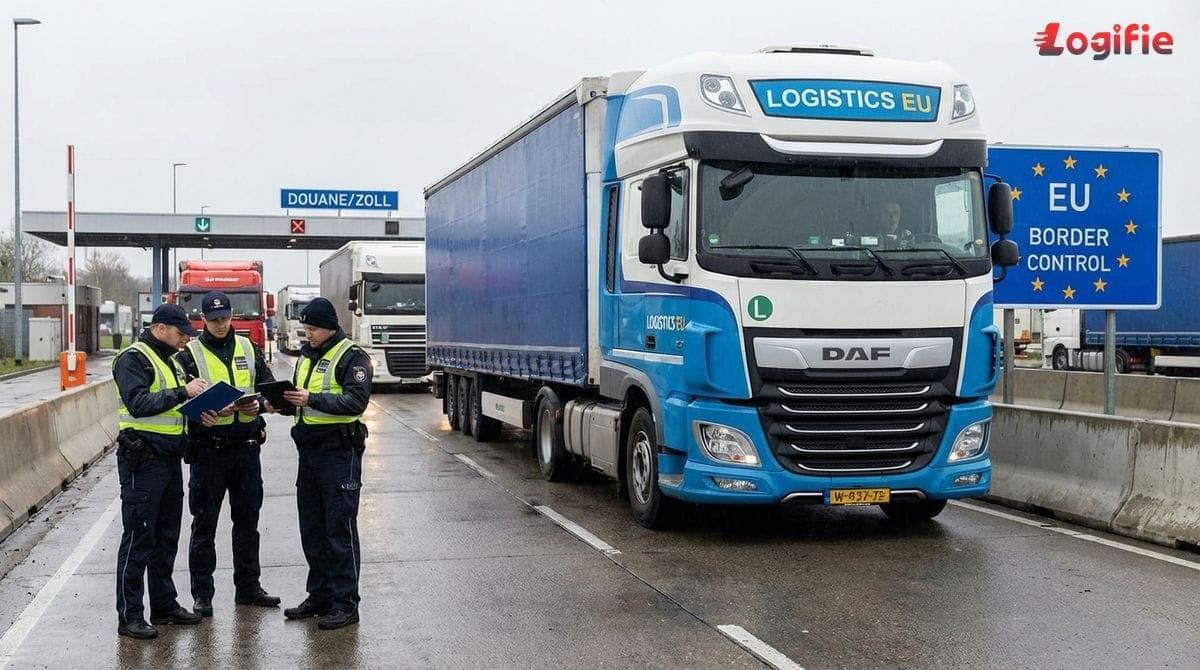
International road freight inside the European Union (EU) is deceptively simple at first glance: once goods enter the single market, they can move freely between member states. But regulatory complexity, paperwork and varying national requirements can trip up even experienced shippers. Understanding the rules and preparing the right documents prevents delays, fines and lost business. This article explains the essential requirements for cross‑border road transport in Europe, highlights common pitfalls and offers practical advice for staying compliant.
The Regulatory Landscape of European Road Freight
The EU's internal market removes tariffs between member states, yet road freight still falls under a web of regulations. Carriers must comply with the EU Mobility Package, which harmonises rules on driver posting, cabotage and vehicle returns. Fleet managers need to track driving hours, ensure vehicles return to their home country every eight weeks and pay drivers operating abroad the same wages as local drivers (SNAP ACC, 2025). Digital tachographs must be fitted in vehicles to monitor compliance, and fleets should capture tachograph data to prove adherence (SNAP ACC, 2025). Low-emission zones, Euro 7 standards and smart tachograph requirements add further obligations for cross-border operations (SNAP ACC, 2025).
Cabotage and Posting Restrictions
Cabotage rules limit the number of domestic trips a foreign truck may perform in another EU state. Under the Mobility Package, a truck can undertake up to three cabotage operations within seven days after completing an international delivery and then must leave the country for a cooling-off period (SNAP ACC, 2025). Employers posting drivers to other member states must file a posting declaration and ensure drivers carry proof of the posting, consignment notes and tachograph records (UK Department for Transport, 2023). Failure to meet posting obligations can result in fines and vehicle impoundment (UK Department for Transport, 2023).
Essential Documents for International Road Transport
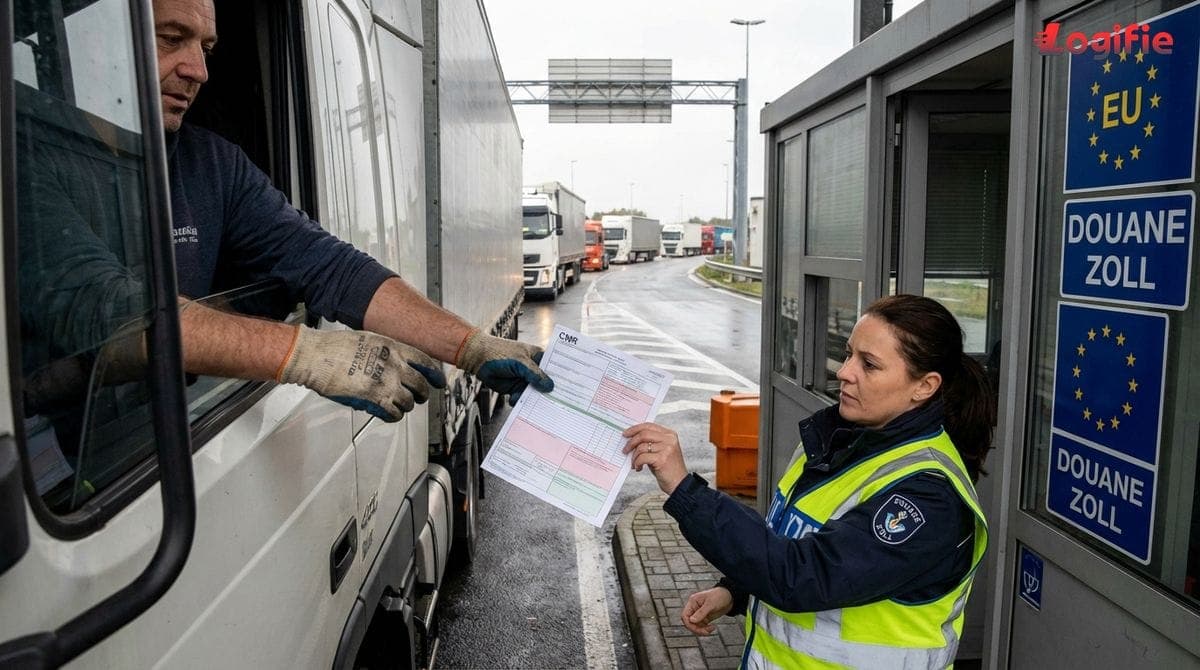
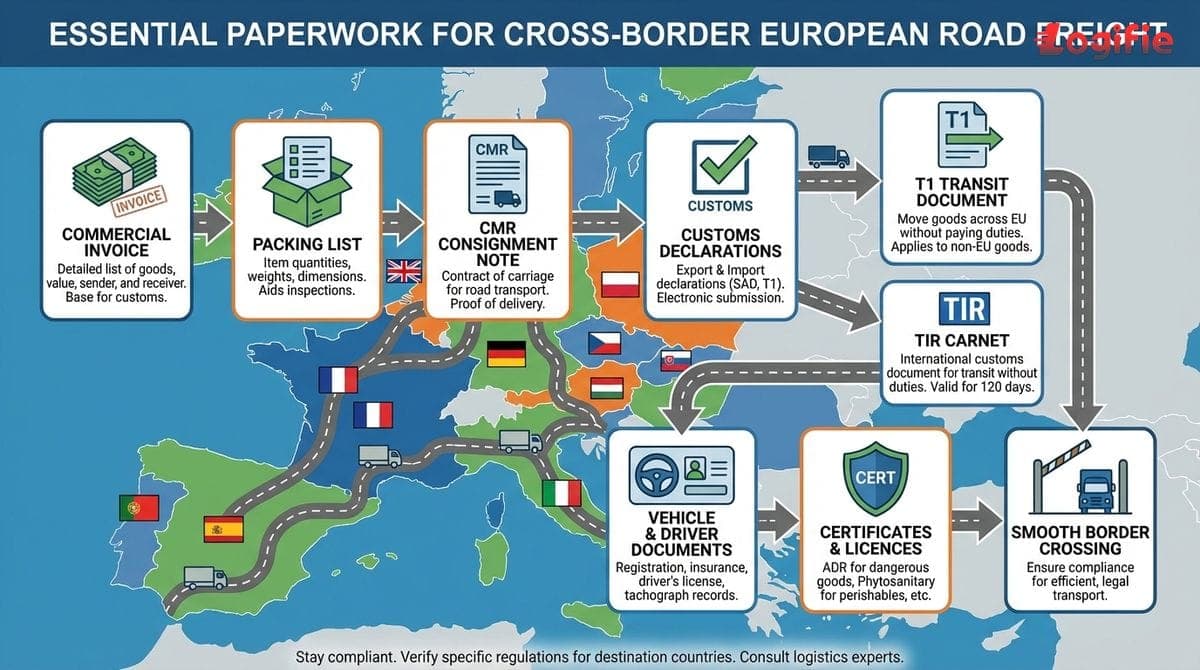
Even within the single market, cross-border shipments require specific paperwork. The CMR consignment note – mandated by the Convention on the Contract for the International Carriage of Goods by Road – is the core document for any road shipment across national borders. It records the sender, consignee, carrier, description of goods and places of dispatch and delivery. Both the shipper and carrier must sign it, and it serves as proof of a contract of carriage.
Other key documents include:
- TIR Carnet: An international customs document issued by the International Road Transport Union that allows sealed vehicles or containers to transit multiple countries without paying customs duties and undergoing inspections at each border
- Community licence: Required for EU-based carriers to perform cross-border road transport within the Union
- CEMT permit: Needed for transport between member states of the European Conference of Ministers of Transport (particularly for routes outside the EU)
- Driver's certificate: Mandatory when employing non-EU drivers to prove the driver is legally employed and qualified
- ADR certificate: Authorisation for vehicles transporting dangerous goods under the European Agreement concerning the International Carriage of Dangerous Goods by Road (ADR)
- ATP certificate: Required for vehicles carrying perishable foodstuffs; it confirms that refrigerated vehicles meet temperature requirements
- Commercial documents: Every shipment must be accompanied by a commercial invoice and packing list, which detail the goods, value, weight and packaging
- Customs documents: Although no customs duties apply inside the EU, transit declarations (T2) may be needed when a shipment crosses non-EU territories, and Single Administrative Documents (SAD) are required for trade with non-EU countries
CMR Consignment Note and Electronic Future
Approximately 470 million CMR notes are issued annually in the EU and UK, and they form the basis for proof of delivery and VAT evidence. A 2008 protocol introduced the electronic CMR (e-CMR) and the EU's eFTI regulation will harmonise electronic freight information from 2025. Many countries already accept e-CMR, but uptake remains patchy. Carriers should check whether digital documents are recognised in each jurisdiction before relying solely on electronic notes.
Operational Rules: Driving Hours, Rest Periods and Vehicle Standards
Driver fatigue is a major cause of accidents and non-compliance. EU rules limit drivers to 9 hours per day (extendable to 10 hours twice a week) and 56 hours per week with a maximum of 90 hours over two weeks (SNAP ACC, 2025). After 4.5 hours of driving, a driver must take a 45-minute break, and daily rest periods of 11 hours are mandatory (European Commission, 2024). Weekly rest of 45 hours must be taken and cannot be spent in the cab. These rules apply across the EU and are monitored via tachographs and roadside inspections (European Commission, 2024).
Vehicles must meet emissions and safety standards. Many cities have low-emission zones requiring Euro 6 or better engines, while Germany introduced a CO₂ component to its truck toll in December 2023, almost doubling toll costs (SNAP ACC, 2025). Carriers should also register their trailers and ensure that vehicles are equipped with proper safety equipment such as fire extinguishers, warning triangles and winter tyres where required (SNAP ACC, 2025).
Common Pitfalls and How to Avoid Them
- Incomplete or incorrect documentation. Missing or incorrectly completed CMR notes, invoices or transit documents cause delays and fines. Always double-check that consignment notes reflect the correct goods description, weight and addresses, and that commercial invoices and packing lists match the shipment
- Ignoring posting rules. Failure to carry a posting declaration and supporting evidence can result in fines for both the employer and the driver
- Violating cabotage limits. Some carriers perform domestic deliveries after an international haul without realising that cabotage is capped at three operations in seven days
- Underestimating driving times. Roadworks, border controls and driver rest requirements can extend transit times considerably. Build buffers into schedules and use route planning software that factors in rest breaks and restrictions.
- Overlooking vehicle standards. Entering low-emission zones without the proper emissions class or neglecting to pay road tolls can lead to penalties. Check local requirements and ensure toll tags are installed for countries with electronic tolling.
- Language barriers and documentation errors. While English is common in transport, consignment notes should include French or other local languages. Use bilingual forms and translation tools to avoid misunderstandings.
Conclusion: Stay Compliant, Stay Competitive
Cross-border road freight in Europe is governed by a mix of harmonised EU rules and national requirements. Shippers and carriers who invest in understanding the regulations, prepare complete documentation and respect driver and cabotage rules will avoid costly mistakes. As the EU moves toward digitised freight information, early adopters of e-CMR and electronic posting declarations will gain efficiency and reduce paperwork. Partnering with a modern logistics provider like Logifie ensures compliance, real-time visibility and streamlined operations across Europe.
Sources
Carrying out international road haulage (UK Department for Transport, 2023) – explains posting declarations, supporting evidence and tachograph records required when UK and EU drivers work abroad.
Road transport workers: driving and rest time rules (European Commission, 2024) – details EU limits on driving hours, breaks, weekly rest requirements and tachograph enforcement.
What fleet managers need to know about EU transport regulations (SNAP ACC Newsroom, 2025) – summarises Mobility Package cabotage limits, driver posting rules and the requirement for vehicles to return home every eight weeks.
What fleet managers need to know about EU transport regulations (SNAP ACC Newsroom, 2025) – highlights Euro 7 emissions standards, low-emission zones, smart tachographs and digital compliance expectations for European fleets.