Antwerpen havnestreik 2026: Over 90 fartøy strandet mens Belgias nasjonale streik lammer europeisk frakt
Antwerpen havnestreik 2026 har strandet over 90 fartøy og skapt forsinkelser i hele Europa. Her er hva transportkjøpere og transportører må gjøre nå.

Logifie Team
Logistics Technology Experts
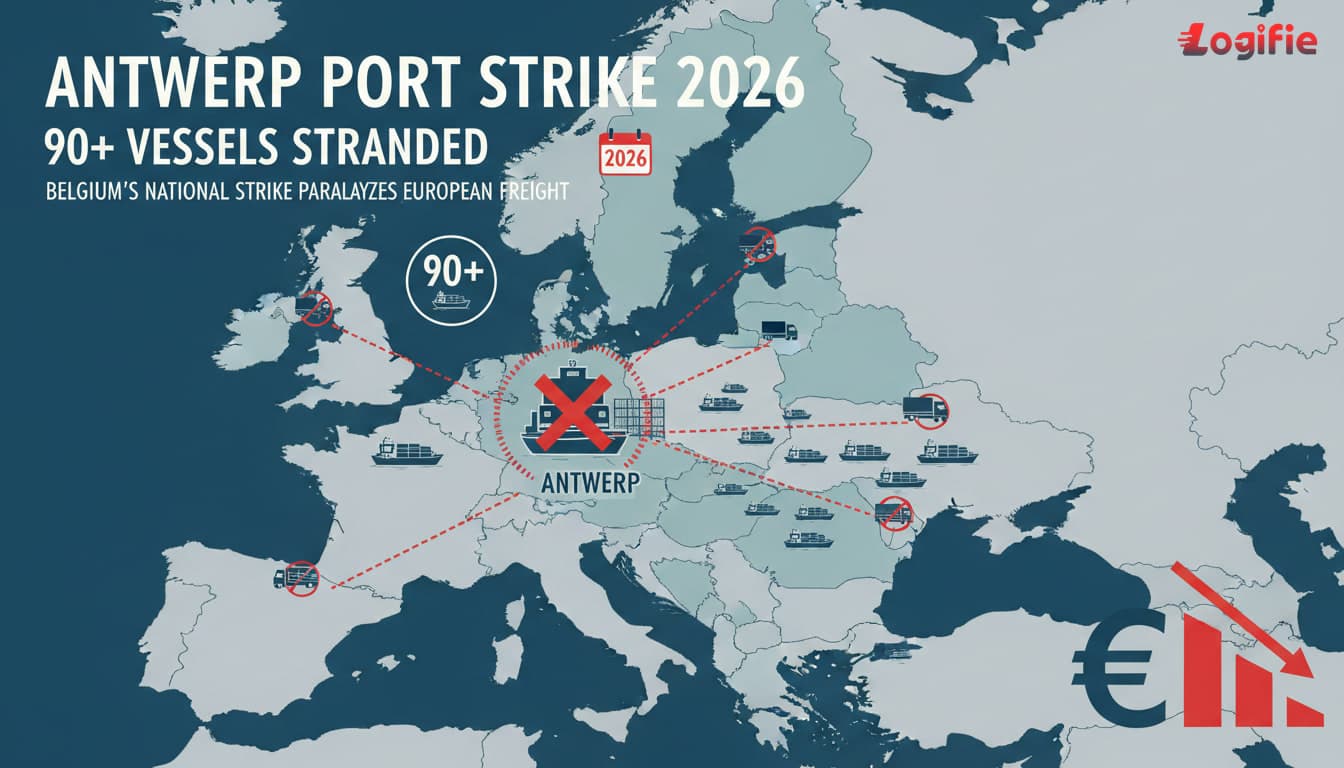
Belgiske sjøloser la ned arbeidet 9. mars og stanset all skipsfart i havnen i Antwerpen-Brugge før den landsdekkende streiken 12. mars.
Antwerpen havnestreik 2026: Hvordan Belgias stans i skipsfarten brer seg gjennom europeisk frakt
Nittién fartøy ligger stille i farvannet utenfor Antwerpen. Siden 9. mars 2026 har havnen i Antwerpen-Brugge, Europas nest største containerhavn, i praksis vært stengt etter at belgiske sjøloser gikk ut i streik. Med en full nasjonal streik 12. mars som samtidig stoppet Belgias flyplasser, jernbane og kollektivtransport, har antwerp port strike 2026 blitt årets viktigste logistikkhendelse drevet av arbeidskonflikt i Europa. For veifraktoperatører sprer konsekvensene seg allerede innover i landet: restriksjoner på terminaltilgang, forsinkelser ved containerhenting og kaotiske omrutingstiltak i hele den nordeuropeiske korridoren. Her er hva som skjedde, hva tallene viser, og hva du bør gjøre akkurat nå.
Hva skjedde: Forklaring på havnestreiken i Belgia
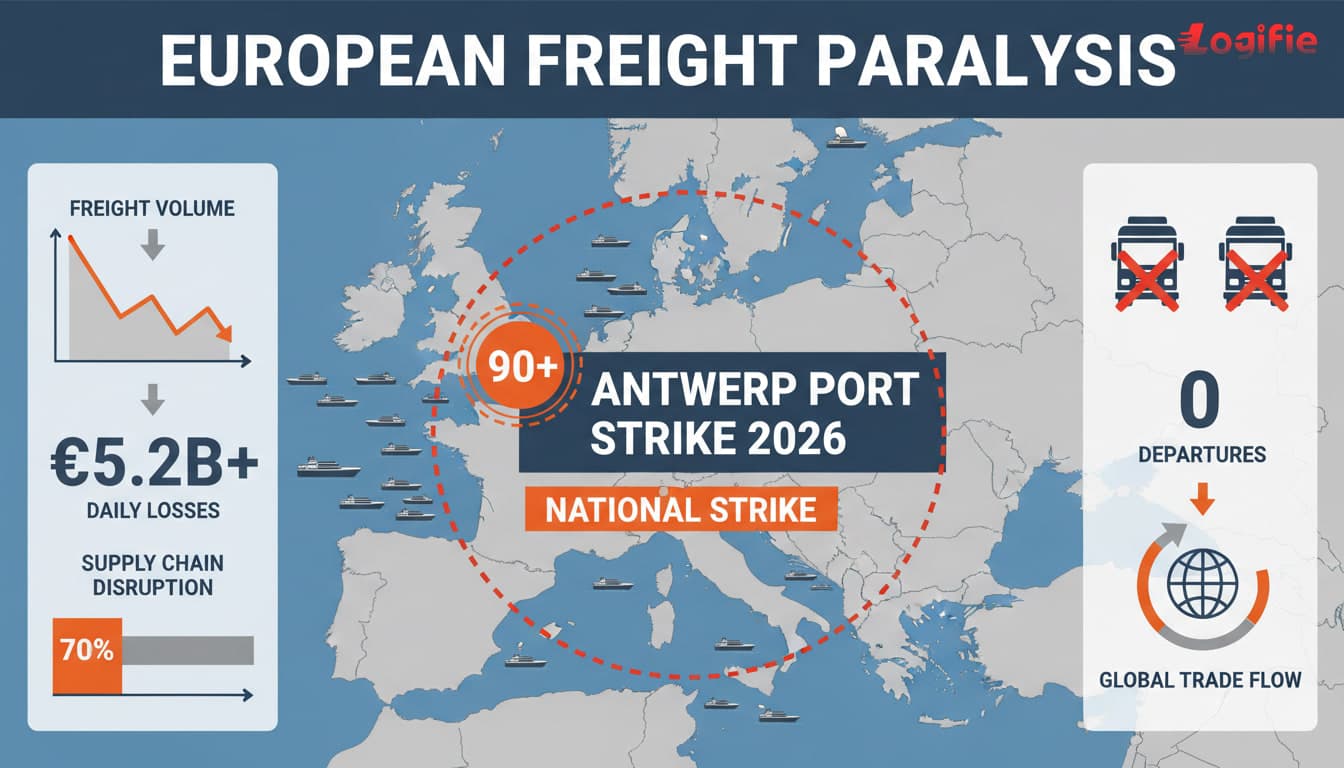
Krisen begynte søndag 9. mars, da sjøloser ved Wandelaar Pilot Station, den kritiske innseilingen til Antwerpen, innledet aksjoner og nektet å lose fartøy inn og ut av havnen. I løpet av få timer ble all inn- og utgående trafikk i både Antwerpen og Zeebrugge innstilt . Aksjonen ble ledet av Belgias tre største fagforbund, CSC/ACV, FGTB/ABVV og CGSLB/ACLVB, i protest mot regjeringens innstrammingsforslag som fagforeningene mener vil kutte pensjonene med opptil 25 % .
Losestreiken var åpningssalven. Innen 10. mars kl. 19.30 sto den bredere nautiske kjeden nærmest helt stille . Den 12. mars stanset en full 24-timers nasjonal streik alle avganger fra Brussel lufthavn, stengte Charleroi lufthavn og reduserte Belgias nasjonale togtrafikk til en minimal rutetabell. Havnen i Antwerpen-Brugge bekreftet at containerterminaler og depoter var stengt for all aktivitet, og både skipspiloter, trafikken på elven Schelde og slusene i havnen ble rammet.
Cargooperatører rapporterte om slot-begrensninger rundt rangeringsområdene i Mechelen , noe som øker risikoen for følgeskader på bildeler og kjemikalier som flyttes mellom havnene og Rhinland i Tyskland.
Selv om en viss løsning var ventet etter 12. mars, advarte havnemyndighetene om at det ville ta minst én til to ekstra dager å rydde opp i etterslepet. Den underliggende arbeidskonflikten om pensjonsreformer er fortsatt uløst, noe som betyr at nye aksjoner ikke kan utelukkes.
Tallene: Omfanget av streiken i Antwerpen havn
Tallene viser hvor alvorlig denne antwerp bruges shipping disruption faktisk er:
52
Nøkkeltall fremhevet i sammenligningen av måltall.
Nøkkeltall fremhevet i sammenligningen av måltall.
39
Nøkkeltall fremhevet i sammenligningen av måltall.
| Måltall | Tall | Kilde |
|---|---|---|
| Innkommende fartøy strandet i Antwerpen | 52 | [Fresh Fruit Portal](https://www.freshfruitportal.com/news/2026/03/12/antwerp-bruges-strike/) |
| Utgående fartøy som ikke kunne seile | 39 | [Fresh Fruit Portal](https://www.freshfruitportal.com/news/2026/03/12/antwerp-bruges-strike/) |
| Ventetid for lektere i Antwerpen | 75 hours | [Logicall](https://logicall.com/blog/european-ports-struggle-with-strikes-and-alliance-vessel-changes/) |
| Ventetid for lektere i Rotterdam | 72 hours | [Logicall](https://logicall.com/blog/european-ports-struggle-with-strikes-and-alliance-vessel-changes/) |
| Gjennomsnittlig fartøyforsinkelse i store EU-havner | 3–5 days | [Kuehne+Nagel](https://mykn.kuehne-nagel.com/news/article/european-ports-face-persistent-congestion-as) |
| Gjennomsnittlig kø for kai i Hamburg | 3 days | [Breakbulk News](https://breakbulk.news/european-port-congestion-deepens-as-inland-bottlenecks-and-strikes-compound-delays/) |
| Kai-ventetid i Pireus (linjefartøy) | 4.4 days | [SeaRates](https://www.searates.com/blog/post/port-congestion-vessel-diversions-march-2026-logistics-insights) |
| Lavvannstillegg på Rhinen for lektere | €50/container | [Logicall](https://logicall.com/blog/european-ports-struggle-with-strikes-and-alliance-vessel-changes/) |
Disse tallene forsterkes av at europeiske havner allerede var hardt belastet før streiken i Belgia. Vinterstormer, omruting via Hormuzstredet og omstrukturering i shippingallianser hadde presset køene opp til de høyeste nivåene siden pandemien på tvers av kontinentet.
Europeisk havnekø 2026: En perfekt storm utover Belgia
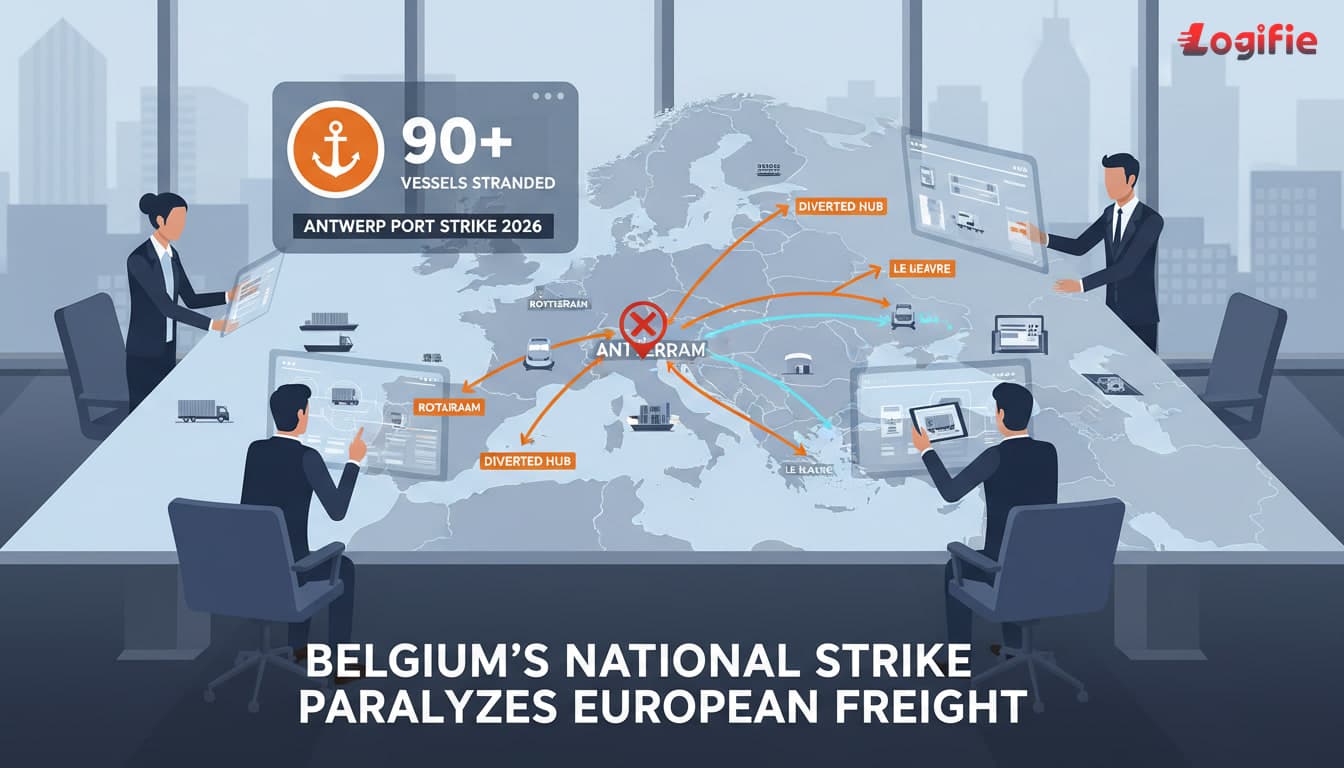
Antwerp port strike 2026 skjedde ikke isolert. Nordeuropeiske havner har kjempet med en sammensatt rekke forstyrrelser gjennom starten av 2026, noe som gjør den belgiske nedstengningen enda mer skadelig.
Rotterdam, Europas største havn, håndterer samtidig en ubestemt streik blant lasher-operatører som har brakt deler av havnen til stillstand . Hutchison Ports' ECT Euromax-terminal har stanset leveranser av tomcontainere med bil . Hamburgs HHLA-terminaler har innført midlertidige restriksjoner på levering av eksportcontainere, og streiker blant båtloser har skapt en gjennomsnittlig ventetid ved kai på tre dager .
I Middelhavet har Pireus ventetider ved kai på 4,4 dager for linjefartøy og seks dager for feederskip. Le Havre hadde planlagt havnearbeiderstreiker gjennom hele mars, men den tre dager lange stansen som var satt til 18.–20. mars ble avlyst etter forhandlinger med myndighetene.
Samtidig legger omruting av fartøy bort fra Hormuzstredet 10 til 14 dager til transittiden mellom Asia og Europa, noe som i praksis fjerner anslagsvis 15 % av global fartøykapasitet fra markedet. Dette skaper fartøyklynger, flere forsinkede skip som ankommer europeiske havner samtidig, og overbelaster terminaler som allerede er presset.
Containerområdene i Rotterdam, Hamburg, Antwerpen og Le Havre rapporteres å være ved eller nær full kapasitet. Lav vannstand i Rhinen begrenser kapasiteten på lektere og utløser tilleggsavgifter på €50 per container.
Belgias nasjonale streik i mars 2026: Ringvirkningen for veifrakt
Når en havn på størrelse med Antwerpen-Brugge går offline, strekker effektene seg langt utover kaikanten. Hver container som ikke kan lastes eller losses, skaper en nedstrøms forsinkelse for lastebilen som skulle hente den. Hvert skip som ikke kan legge til, betyr en omplanlagt FTL- eller LTL-forsendelse et sted i hinterlandet.
Veifraktoperatører som betjener korridoren Antwerpen-Rotterdam-Hamburg rapporterer om forlenget terminalventetid, og enkelte sjåfører mister hele arbeidsdager i kø. Belgium national strike march 2026 den 12. mars forverret problemet ved å forstyrre selve tilgangen til veitransport, motorveisforstyrrelser, redusert kollektivtransport for lagerarbeidere og streikevakter nær logistikkknutepunkter bidro alle til redusert gjennomstrømning.
De mest umiddelbart berørte grensekryssende korridorene inkluderer industrikorridoren Antwerpen–Ruhr inn i Tyskland (bildeler, kjemikalier), Benelux–Frankrike-ruten via Lille og Paris, samt forbindelser sørover mot Italia via Luxembourg. Speditører har anbefalt å fremskynde kritiske forsendelser med minst 48 timer for å unngå det verste av forstyrrelsene.
Tidspunktet er spesielt smertefullt. Mars er tradisjonelt en sterk måned for europeiske fraktvolumer når bedrifter fyller opp etter vinteren og forbereder seg på etterspørselen i andre kvartal. Når terminaler begrenser tilgangen og fartøysplanene er i uorden, kolliderer den vanlige sesongmessige økningen i veifraktbestillinger med redusert havnekapasitet og skaper både forsinkelser og press på spotratene samtidig.
Hva virkningen av havnestreiken betyr for rater og kostnader
Terminaltillegg for ventetid blir brukt i flere nordeuropeiske havner. Demurrage- og detention-gebyrer på containere øker når boksene står lenger enn planlagt. For veifrakttransportører spiser drivstoff som brukes under lang tomgang ved havneportene, til dagens høye dieselpriser , kombinert med alternativkostnaden ved tapte oppdrag, direkte av de allerede tynne marginene.
Historisk har store europeiske havneforstyrrelser utløst kortsiktige økninger i spotrater på 5–15 % i berørte korridorer, ettersom tilgjengelig lastebilkapasitet strammes inn og transportkjøpere leter desperat etter alternativer. Det nåværende miljøet, med flere havner som er begrenset samtidig, tyder på at den øvre delen av intervallet er mest sannsynlig.
Transportkjøpere med fleksible rutingsstrategier og tilgang til sanntids sporing av forsendelser med ETA-synlighet er bedre posisjonert til å tilpasse seg raskt, omdirigere laster til mindre overbelastede terminaler eller justere leveringsplaner før kostnadene eskalerer.
Hva transportører og vareeiere bør gjøre akkurat nå
Streiken i Antwerpen krever umiddelbar operativ respons. Her er en praktisk sjekkliste for logistikkledere, vareeiere og transportører som opererer i europeiske korridorer:
- Sjekk terminalstatus daglig for Antwerpen, Rotterdam, Hamburg og Le Havre før lastebiler sendes ut, restriksjonene endrer seg raskt
- Forhåndsbook terminalsloter der det er mulig for å unngå å ankomme en havn uten kapasitet for containeren din
- Aktiver alternative havnestrategier ved å vurdere Bremerhaven, Wilhelmshaven eller Dunkerque som avlastningshavner for last som normalt går via Antwerpen
- Utvid leveringsvinduer i kontrakter der det er mulig for å absorbere forsinkelser på 3–5 dager uten å utløse gebyrer
- Overvåk status for lektere og innlandsfarvann med ventetider på 72–75 timer kan enkelte varer gå raskere på vei selv på ruter som normalt bruker lekter
- Gå gjennom eksponeringen for drivstoff- og ventetidskostnader den belgiske nasjonale streiken forverrer et allerede høyt drivstoffkostnadsnivå i Europa
- Kommuniser proaktivt med kunder ved å bruke sanntidsdata for sporing til å styre forventningene til leveringstid
- Bygg bufferlager for kritiske komponenter eller varer som er avhengige av Antwerpen som gateway-havn
- Vurder forsikringsdekning for tap knyttet til forsinkelser, kontroller om vareforsikringen dekker streikerelaterte forstyrrelser
- Følg [offentlige helligdager](https://logifie.com/holidays) og planlagte arbeidskonflikter i driftslandene dine for å forutse nye forstyrrelser
- Diversifiser transportørrelasjoner for å sikre tilgang til kapasitet på tvers av flere korridorer
- Vurder å [bli med i et transportørnettverk](https://logifie.com/carrier) som gir lastsynlighet på tvers av flere europeiske korridorer
FAQ
Hvordan påvirker streiken i Antwerpen europeisk frakt?
Streiken i Antwerpen havn har strandet over 90 fartøy og stanset all maritim trafikk ved Europas nest største containerhavn siden 9. mars 2026. Forstyrrelsen sprer seg inn i veifraktoperasjoner med restriksjoner på terminaltilgang, utvidede sjåførventetider på opptil 75 timer for lektere og forsinkelser i containerhenting som forplanter seg gjennom Belgia, Nederland, Tyskland og Frankrike. Med Rotterdam, Hamburg og middelhavshavner også overbelastet samtidig, er hele det europeiske logistikknettverket under enestående press , med gjennomsnittlige fartøyforsinkelser på 3–5 dager i store EU-havner.
Hva forårsaket Belgias nasjonale streik i mars 2026?
Belgias tre største fagforbund kalte inn til en landsdekkende 24-timersstreik 12. mars på grunn av regjeringens innstrammingsforslag som ville endre pensjonsytelsene. Maritime fagforeninger protesterer spesielt mot endringer de mener vil kutte pensjonene med opptil 25 % . Den havnespesifikke aksjonen startet tidligere, 9. mars, da sjøloser ved Wandelaar Pilot Station nektet å lose fartøy, før den vokste til den bredere nasjonale streiken som rammet flyplasser, jernbane, kollektivtransport og logistikkknutepunkter over hele landet.
Hvordan kan vareeiere unngå forsinkelser fra europeisk havnekø?
Vareeiere kan redusere effekten av european port congestion 2026 ved å spre havneinnganger i Nordsjøområdet, for eksempel Bremerhaven, Wilhelmshaven og Dunkerque som alternativer, utvide leveringsvinduer i kontrakter og bruke sporingsplattformer i sanntid for ETA-synlighet. Forhåndsbooking av terminalsloter, oppbygging av sikkerhetslager for kritiske varer og å fremskynde kritiske forsendelser med 48 timer før kjente forstyrrelser er alle effektive tiltak. For grensekryssende europeisk frakt hjelper det å jobbe med en plattform som gir synlighet på tvers av flere korridorer for å finne de raskeste rutene når hovedkanaler er blokkert.
Klar til å flytte frakt i Europa med sanntidssynlighet? Få et gratis tilbud | Bli med i vårt transportørnettverk
Kilder
Store forstyrrelser tar over havnen i Antwerpen-Brugge
Streik lammer skipsfarten i Antwerpen og andre belgiske havner
Belgisk streik stopper Antwerpen havn og flytrafikk
Kriseoppdatering: forstyrrelser på grunn av nasjonal streikedag 12. mars
Belgisk havnestreik stopper skipsfarten før landsdekkende aksjon
Europeiske havner sliter med køer og forsinkelser
Europeiske havner møter vedvarende overbelastning
Europeisk havnekø forverres når innlandsflaskehalser øker