Transport feroviar China-Europa 2026: impact asupra transportului rutier
Transportul feroviar China-Europa 2026 a crescut cu 25% până la 352.100 TEU. Vedeți cum avântul intermodal remodelează cererea de transport rutier în Polonia, Germania și Benelux.

Logifie Team
Logistics Technology Experts
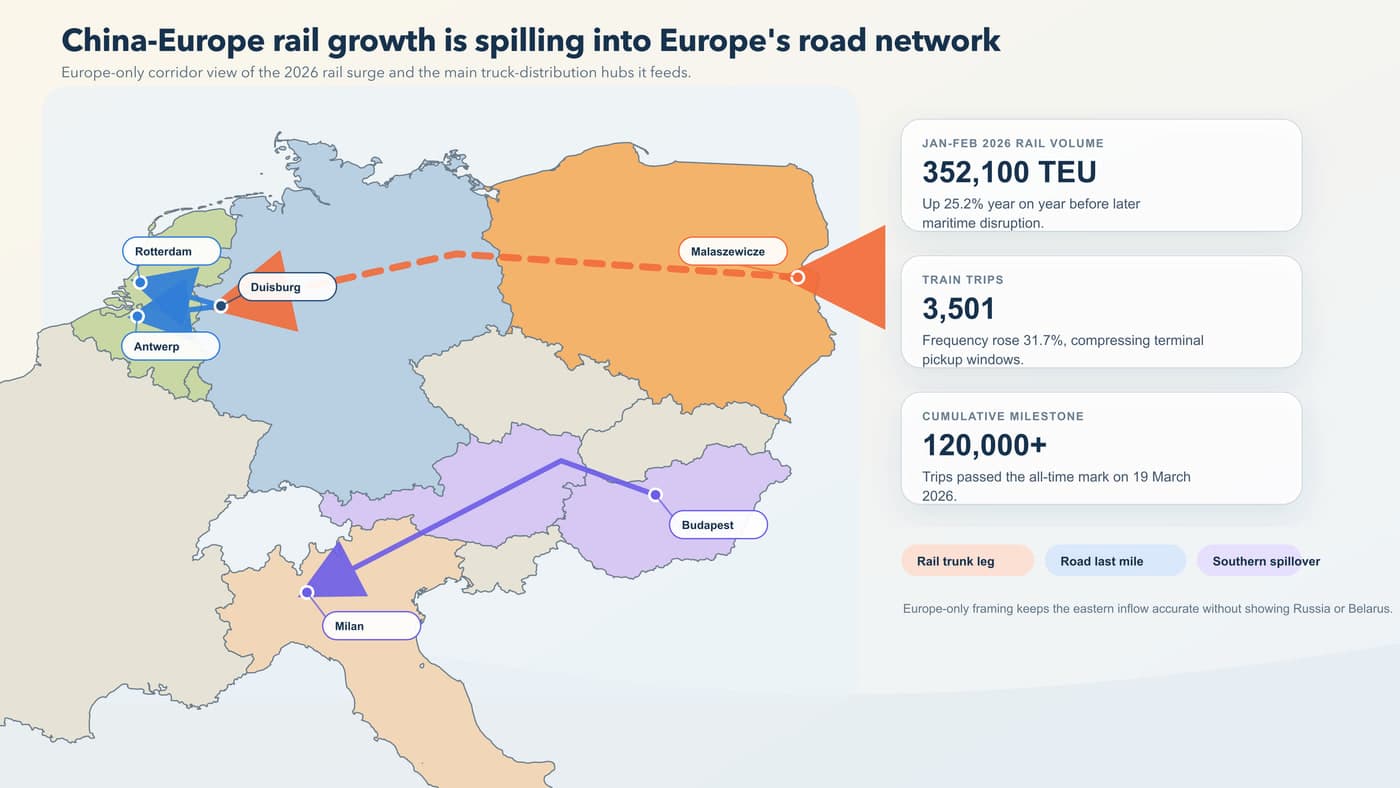
Cele 352.100 TEU transportate pe China-Europe Railway Express în ianuarie și februarie 2026 nu reprezintă doar un reper feroviar. Ele indică și un șoc al cererii de camioane pentru terminale, brokeri vamali și transportatori de ultim kilometru din Polonia, Germania, Benelux și Europa Centrală.
Transport feroviar China-Europa 2026: impact asupra transportului rutier
Povestea transport feroviar china europe 2026 este mai amplă decât un simplu titlu despre schimbarea modului de transport. RailFreight.com a raportat o creștere de 25,2% față de anul precedent a TEU, însă fiecare container care ajunge într-un terminal european mai are nevoie de un camion pentru livrarea vamală, transferul cross-dock sau distribuția finală.
Pentru transportatorii și expeditorii care folosesc vizibilitate în timp real pe liniile transfrontaliere, întrebarea operațională nu mai este dacă railul contează. Întrebarea este cât de repede își poate reacționa rețeaua atunci când 3.501 curse de tren împing mai multe containere în Malaszewicze, Duisburg și Budapesta, în ferestre de livrare tot mai strânse.
352.100 TEU
Volumul transportului feroviar China-Europa a crescut cu 25,2% față de anul precedent în primele două luni ale lui 2026.
Ce s-a întâmplat pe coridorul China-Europa
La 19 martie 2026, un serviciu Chengdu-Polonia a marcat al 120.000-lea parcurs cumulativ China-Europa , un reper care a împins și valoarea totală a mărfurilor rețelei peste 490 de miliarde de dolari. Acest moment este important deoarece confirmă faptul că acest coridor face acum parte permanent din planificarea importurilor europene, nu este doar un canal de preluare de surplus.
Accelerarea din primele luni ale lui 2026 a fost și mai importantă. anewz.tv a numărat 3.501 curse de tren în ianuarie și februarie, cu 31,7% peste aceeași perioadă din 2025. Numărul curselor a crescut mai rapid decât TEU, semnalând plecări mai dese și activitate terminală mai intensă pe partea europeană.
Creșterea nu a fost distribuită uniform. Cursele outbound China-Europa au urcat la 1.736 și au transportat 181.200 TEU, în timp ce serviciile inbound cu origine europeană au crescut mai moderat. Caixin Global a legat acest model de reconfigurarea lanțurilor de aprovizionare și de o creștere de 12% a comerțului China-Rusia, ceea ce amplifică presiunea asupra porților terminale vestice.
Și harta rutelor se extinde. 128 de orașe chineze sunt acum conectate la 232 de orașe europene în 26 de țări, ceea ce înseamnă că mai multe huburi din interiorul continentului pot alimenta rețelele transfrontaliere de camioane, în loc să se bazeze exclusiv pe porturile maritime.
Riscul operațional major este dezechilibrul dintre creșterea outbound și inbound. Fluxurile feroviare mai intense către UE, orientate mai mult către import, creează congestie terminală asimetrică și un program de camioane mai strict în jurul descărcării, vămuirii și expedierii de ultim kilometru.
Pe cifre: de ce railul câștigă marfa urgentă
Railul beneficiază de o combinație rară de viteză, reziliență și reducerea diferențelor de cost. Cu rutele maritime încă perturbate și transportul aerian prea scump pentru multe categorii, podul terestru eurasiatic pare credibil din punct de vedere comercial pentru expeditorii care au nevoie de reaprovizionare mai rapidă fără a plăti tarifele premium ale aerianului.
3.501
Frecvența curselor a crescut cu 31,7% față de anul precedent, oferind importatorilor mai multe opțiuni de plecare și terminalelor europene mai multe sosiri de procesat.
+47,5%
Plecarile China-Europa au crescut mult mai rapid decât serviciile inbound, ceea ce concentrează presiunea de livrare asupra rețelelor rutiere din UE.
| Măsură | Ian-Feb 2025 | Ian-Feb 2026 | Schimbare |
|---|---|---|---|
| Curse totale de tren | 2.658 | 3.501 | +31,7% |
| TEU total transportat | 281.200 | 352.100 | +25,2% |
| Curse outbound (China către Europa) | 1.176 | 1.736 | +47,5% |
| TEU outbound | 128.500 | 181.200 | +41,0% |
| Curse inbound (Europa către China) | 1.482 | 1.765 | +19,2% |
| TEU inbound | 152.700 | 170.900 | +11,9% |
| Orașe europene deservite | ~220 | 232 | +12 orașe |
Aceste cifre contează deoarece schimbă ritmul operațiunilor rutiere. Frecvența mai mare a trenurilor înseamnă mai multe loturi de containere care sosesc în ferestre scurte de preluare, în timp ce densitatea mai mare a TEU outbound sporește nevoia de capacitate de camion rezervată în avans, de coordonare vamală și de depozitare pe termen scurt în jurul nodurilor terminale.
De ce avântul feroviar contează pentru transportul rutier european
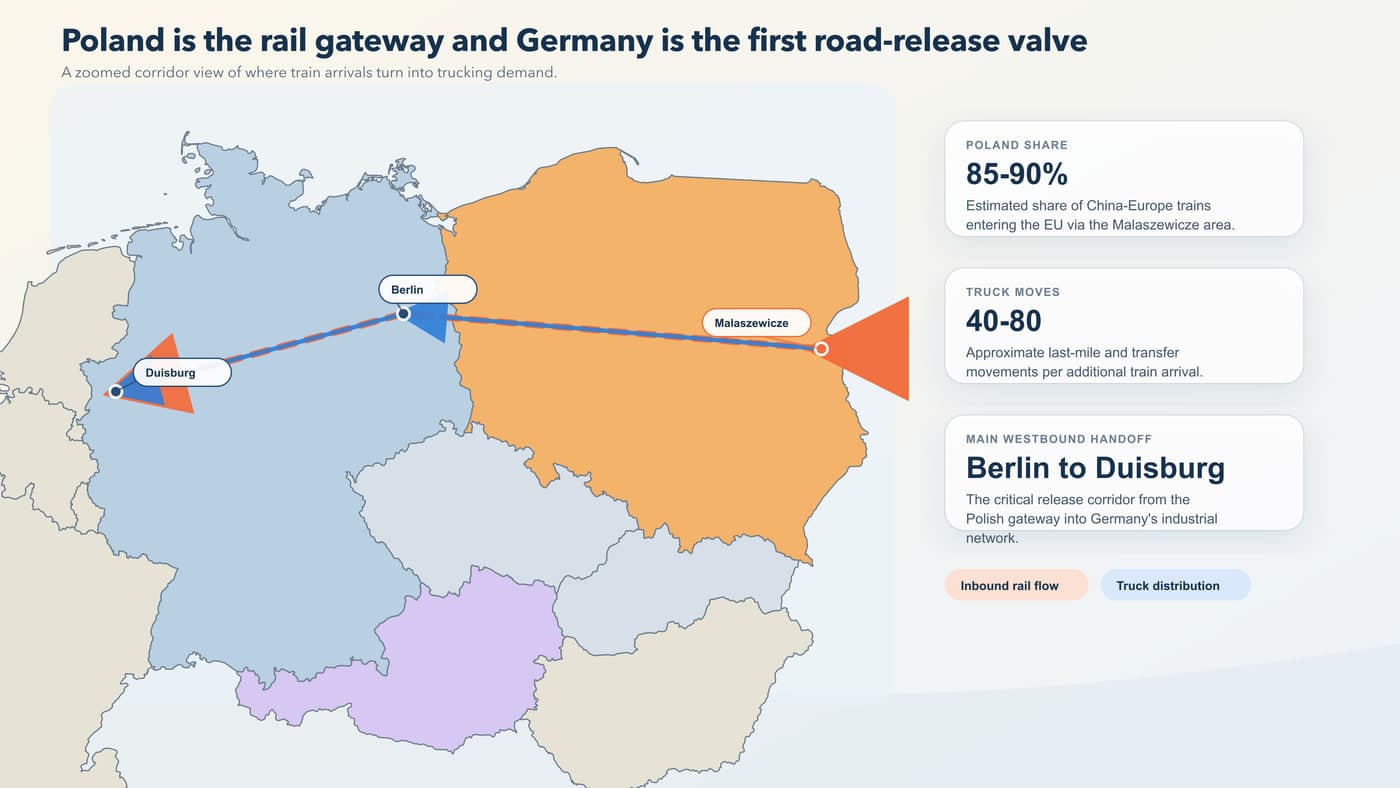
Cea mai importantă poartă de intrare rămâne Malaszewicze din Polonia , unde intră în UE o proporție estimată de 85-90% din trenurile China-Europa. Asta transformă estul Poloniei într-unul dintre cele mai importante puncte de concentrare a cererii de camioane din întreaga rețea logistică europeană.
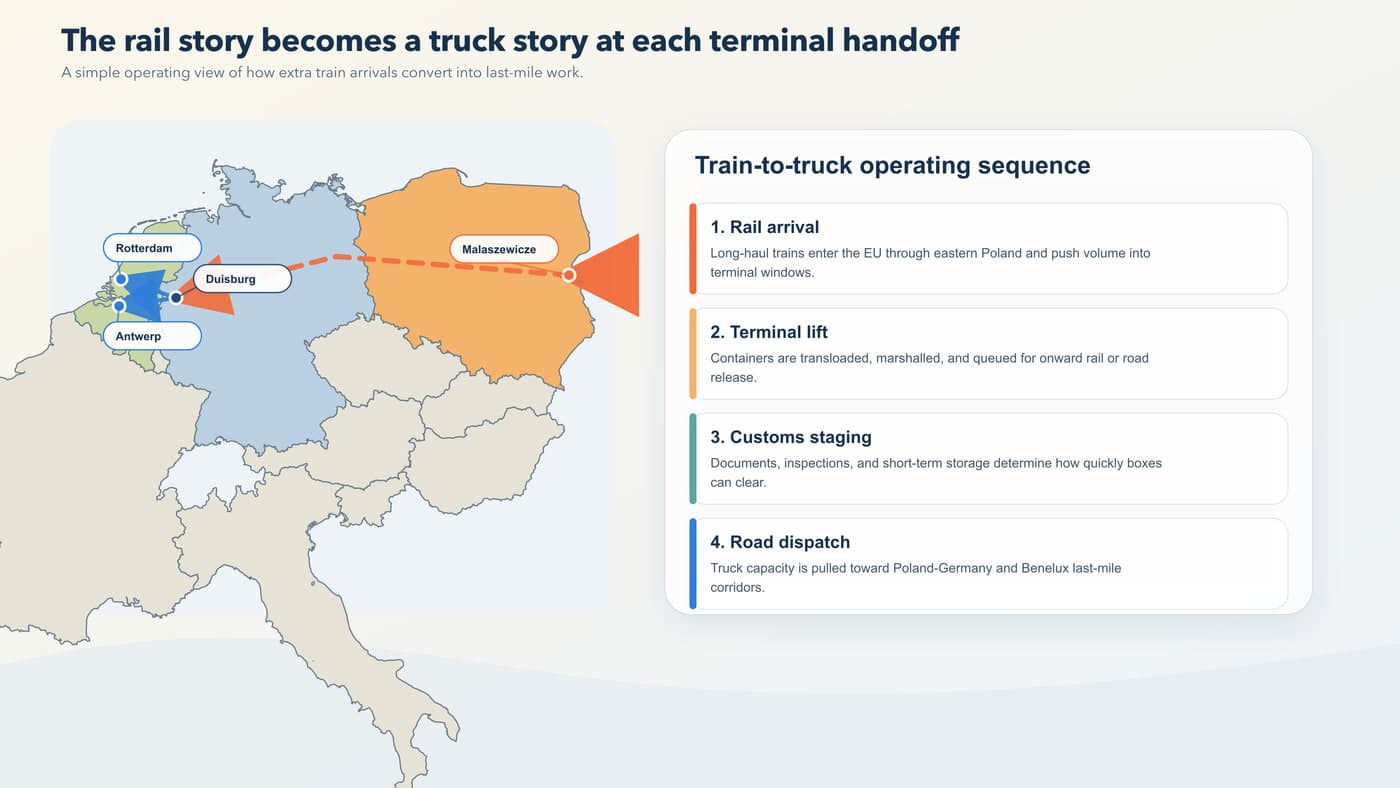
În acel punct de frontieră, containerele trec de la ecartamentul larg de 1.520 mm la ecartamentul european de 1.435 mm sau trec direct pe camioane. Fiecare tren suplimentar creează mai multă muncă pentru drayage, ultim kilometru, depozitare sub regim vamal și distribuție rutieră eliberată vamal în Polonia și Germania.
"Când costurile transportului rutier pe distanțe lungi cresc, transportul intermodal devine mai atractiv, însă camionul rămâne indispensabil la primul și la ultimul kilometru."
- UIRR market insight, 2026
Acest citat se potrivește contextului de cost din 2026. Raportările legate de UIRR au evidențiat taxe de autostradă austriece în creștere cu 7,7%, tarife în Flandra în creștere cu 20% și trecerea Olandei către taxarea pe distanță. Aceste schimbări slăbesc economia transportului rutier pur pe distanțe lungi, dar cresc valoarea transportului rutier scurt, critic ca timp, din jurul terminalelor.
Contextul de politici întărește aceeași tendință. Noile reguli UE privind ajutoarele multimodale intră în vigoare la 30 martie 2026 și majorează plafoanele ajutoarelor pentru schimbarea modului de transport de la 50% la 90%, oferind expeditorilor și companiilor logistice și mai multe motive să mute volumele de trunk-haul pe rail, cumpărând în același timp capacitate rutieră în jurul nodurilor terminale.
85-90%
Majoritatea trenurilor China-Europa intră în continuare în UE prin Malaszewicze, transformând Polonia în principalul punct de lansare pentru distribuția rutieră.
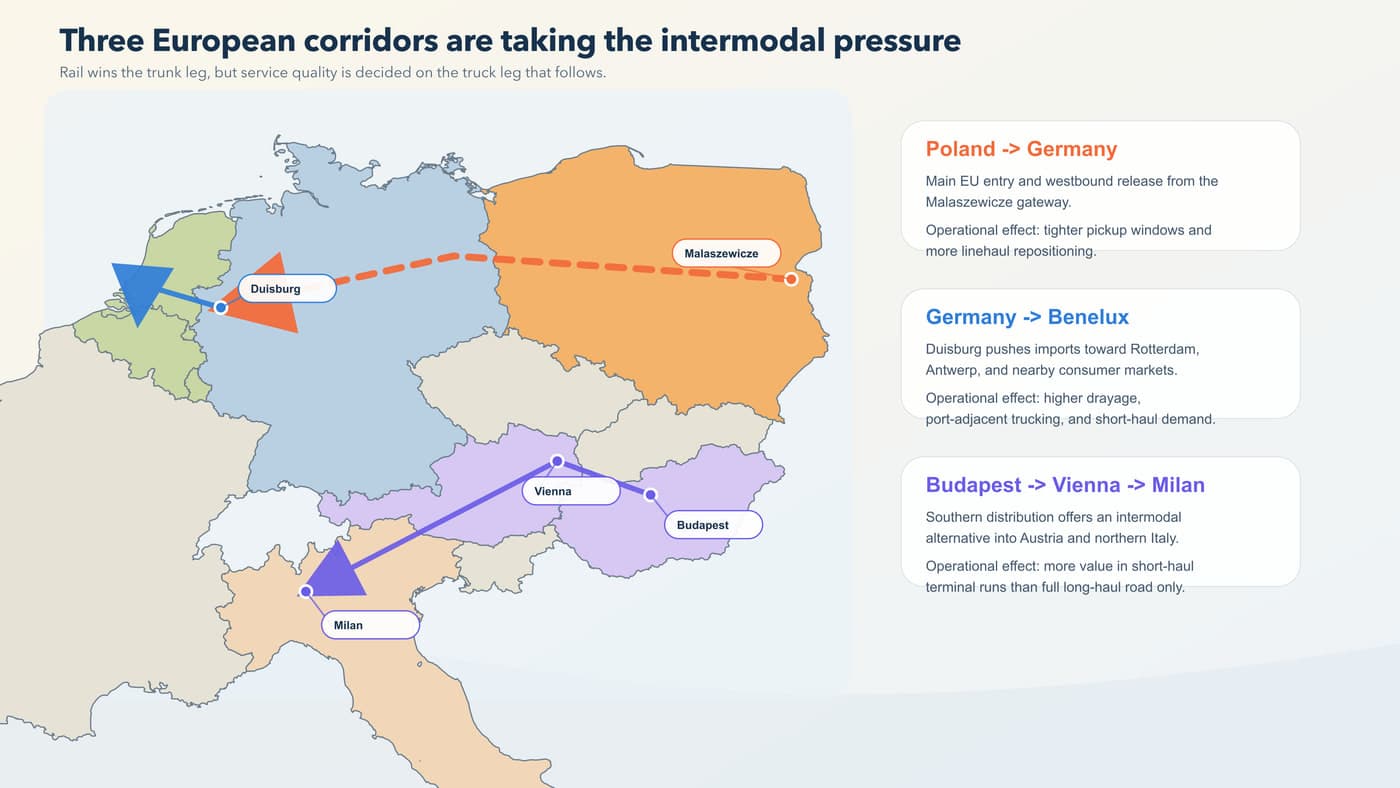
- Coridorul Polonia-Germania - axa autostrăzilor A2 și A4 devine mai valoroasă pe măsură ce throughput-ul terminalelor crește în estul Poloniei.
- Coridorul Germania-Benelux - Duisburg rămâne hubul occidental de redistribuire pentru importurile transportate pe calea ferată și destinate Olandei, Belgiei și nordului Franței.
- Coridorul Budapesta-Viena-Milano - creșterea terminalelor din sud generează o nouă cerere de transport transfrontalier către Austria și nordul Italiei.
- Stratul serviciilor terminale - brokerajul vamal, depozitarea sub regim vamal și distribuția LTL pe distanțe scurte se extind toate atunci când volumele feroviare se adună în valuri previzibile de sosire.
Transportatorii aflați la o rază de două până la patru ore de Malaszewicze, Duisburg sau Budapesta nu mai vând doar capacitate. Ei vând capacitate de reacție la terminal și abilitatea de a absorbi volatilitatea programărilor fără a rata sloturile de livrare.
Rail vs ocean vs rutier: economia coridorului în 2026
Alegerea modului de transport se schimbă deoarece vechea primă de cost a railului contează mai puțin. Estimarea Dimerco de 13-25 de zile pentru rail pare mult mai convingătoare atunci când rutele maritime ajung la 35-50 de zile din cauza perturbărilor din Suez și Hormuz, iar suprataxele de urgență pentru combustibil presează economia transportului maritim.
| Factor | Maritim (prin Suez sau Cap) | Rail (prin coridoarele eurasiatice) | Rutier (doar segmentul terminal) |
|---|---|---|---|
| Timp de tranzit | 35-50 de zile | 13-25 de zile | 1-5 zile |
| Cost orientativ per TEU | 2.500-4.700 USD | 1.500-5.500 USD | 800-2.500 EUR |
| Fiabilitate actuală | Perturbată de devieri | Mai stabilă pe uscat | Depinde de șofer și de disponibilitatea slotului |
| Cel mai bun caz de utilizare | Marfă cu urgență redusă | Reaprovizionare sensibilă la timp | Livrare finală și drayage terminal |
| Implicație operațională | Expunere mai lungă a stocului | Intensitate terminală mai mare în Europa | Mai multă valoare în capacitatea locală flexibilă |
Transportul rutier câștigă în continuare la agilitate după sosirea în terminal. De aceea, expeditorii au din ce în ce mai mult nevoie de un mix de FTL, LTL și vizibilitate pregătită pentru vamă susținut de instrumente precum fluxurile de ofertare Logifie și monitorizarea combustibilului atunci când prețuiesc ultimul segment.
13-25 de zile
Railul oferă în prezent o fereastră de tranzit Asia-Europa mult mai rapidă decât maritimul, rămânând totodată mult mai ieftin decât transportul aerian.
Ce ar trebui să facă acum expeditorii și transportatorii
Avântul din 2026 ar trebui tratat ca un semnal de proiectare a rețelei, nu ca o știre trecătoare. Expeditorii care cartografiază din timp expunerea terminalelor și transportatorii care își aliniază flotele cu punctele de transfer intermodal vor fi mai bine poziționați atunci când vârfurile din T2 și T3 adaugă și mai multă volatilitate unor coridoare deja aglomerate.
- Cartografiați proximitatea terminalelor - măsurați cât de aproape sunt depozitele și flotele partenere de Malaszewicze, Duisburg, Budapesta și terminalele interioare secundare.
- Asigurați vizibilitatea dispecerizării - folosiți fluxuri de tracking și ETA astfel încât capacitatea camioanelor să fie aliniată la modelele de sosire a trenurilor, nu la presupuneri săptămânale statice.
- Reprețuiți segmentele de coridor - actualizați tarifele pe liniile Polonia-Germania și Germania-Benelux pentru a reflecta ferestrele mai strânse de preluare, inflația taxelor de drum și riscul de așteptare în terminal.
- Pregătiți opțiuni LTL - consolidați marfa terminală cu volum redus, astfel încât sosirile intermodale să nu oblige la plecări FTL goale sau subutilizate.
- Monitorizați combustibilul și calendarul sărbătorilor - combinați monitorizarea prețurilor la combustibil cu planificarea sărbătorilor transfrontaliere înainte de a oferta segmentele rutiere determinate de terminal.
- Planificați vamă și conformitate - viteza intermodală își pierde rapid valoarea dacă pașii ICS2, tranzit și dovadă de livrare nu sunt sincronizați între partenerii feroviari și rutieri.
Dacă modelul dumneavoastră de tarifare presupune încă concurență doar rutieră pe liniile legate de Asia, pierdeți din vedere faptul că cererea rutieră generată de terminale schimbă deja economia liniilor în Polonia și Germania mai întâi, iar fenomenul se va extinde spre vest pe măsură ce volumul continuă să se acumuleze.
Întrebări frecvente
Cu cât a crescut transportul feroviar China-Europa în 2026?
În ianuarie și februarie 2026, coridorul a transportat 352.100 TEU pe 3.501 curse de tren, potrivit RailFreight.com și anewz.tv . Aceasta înseamnă o creștere de 25,2% a TEU și o creștere de 31,7% a curselor față de aceeași perioadă din 2025.
Ce determină trecerea de la maritim la feroviar pe rutele China-Europa?
Trei forțe converg: perturbarea maritimă din zona Mării Roșii și a strâmtorii Hormuz, tranzitul feroviar mai rapid de 13-25 de zile, și o diferență de cost mai mică, pe măsură ce transportatorii maritimi adaugă suprataxe și devieri. Pentru expeditorii care au nevoie ca stocul să revină rapid în Europa, railul oferă acum o soluție intermediară între transportul maritim lent și transportul aerian costisitor.
Cum afectează avântul feroviar China-Europa operatorii europeni de transport rutier?
Creează mai mult de lucru în jurul distribuției terminale, transferului vamal și transportului rutier transfrontalier pe distanțe scurte. Deoarece majoritatea trenurilor intră prin Polonia și apoi curg spre Germania și Benelux, câștigătorii din rutier sunt transportatorii care pot oferi răspuns rapid la terminal și control fiabil al ETA și nu doar capacitate de linehaul pe distanțe lungi.
Concluzie: creșterea railului creează mai multă muncă rutieră, nu mai puțină
Cifra-cheie în transport feroviar china europe 2026 este creșterea de 25,2% a TEU, însă concluzia comercială pentru Europa este mai simplă: creșterea mai rapidă a railului înseamnă mai mult transport rutier condus de terminale, mai multă recalibrare a tarifelor de coridor și mai multă valoare în controlul operațional transfrontalier. Companiile care tratează railul ca pe o sursă de cerere rutieră nouă, nu ca pe o amenințare la adresa cererii rutiere, vor fi mai bine poziționate pentru restul anului 2026.
Dacă aveți nevoie de mai mult context la nivel de linie, analiza de piață Logifie și pagina despre noi explică modul în care vizibilitatea transfrontalieră, coordonarea transportatorilor și inteligența de preț se îmbină atunci când volumele intermodale accelerează.
Surse
Transportul feroviar China-Europa a crescut cu 25,2% față de anul precedent până la 352.100 TEU în ianuarie și februarie 2026, cu o creștere puternică a fluxurilor outbound din China către Europa.
Coridorul a gestionat 3.501 curse de tren în primele două luni ale lui 2026, cu 31,7% mai mult decât în anul anterior.
China-Europe Railway Express a depășit pragul de 120.000 de curse și conectează acum 128 de orașe chineze cu 232 de orașe europene în 26 de țări.
Malaszewicze gestionează o pondere estimată de 85-90% din trenurile China-Europa care intră în UE și își extinde capacitatea multimodală.
Tranzitul feroviar din China către Europa durează de regulă 13-25 de zile, păstrând un avantaj major de viteză față de transportul maritim.
Inflația costurilor rutiere și semnalele de competitivitate intermodală rămân vizibile în 2026, pe măsură ce taxele de drum și taxele de acces cresc pe piețele europene cheie.