Dutch inspectorate halts Amsterdam haulier on 2026 wage breaches
On 2026-05-20 the Nederlandse Arbeidsinspectie suspended an Amsterdam road-freight operator for two months over repeated WML wage and holiday-pay breaches after EUR 280,000 in earlier fines.

Logifie Team
Logistics Technology Experts
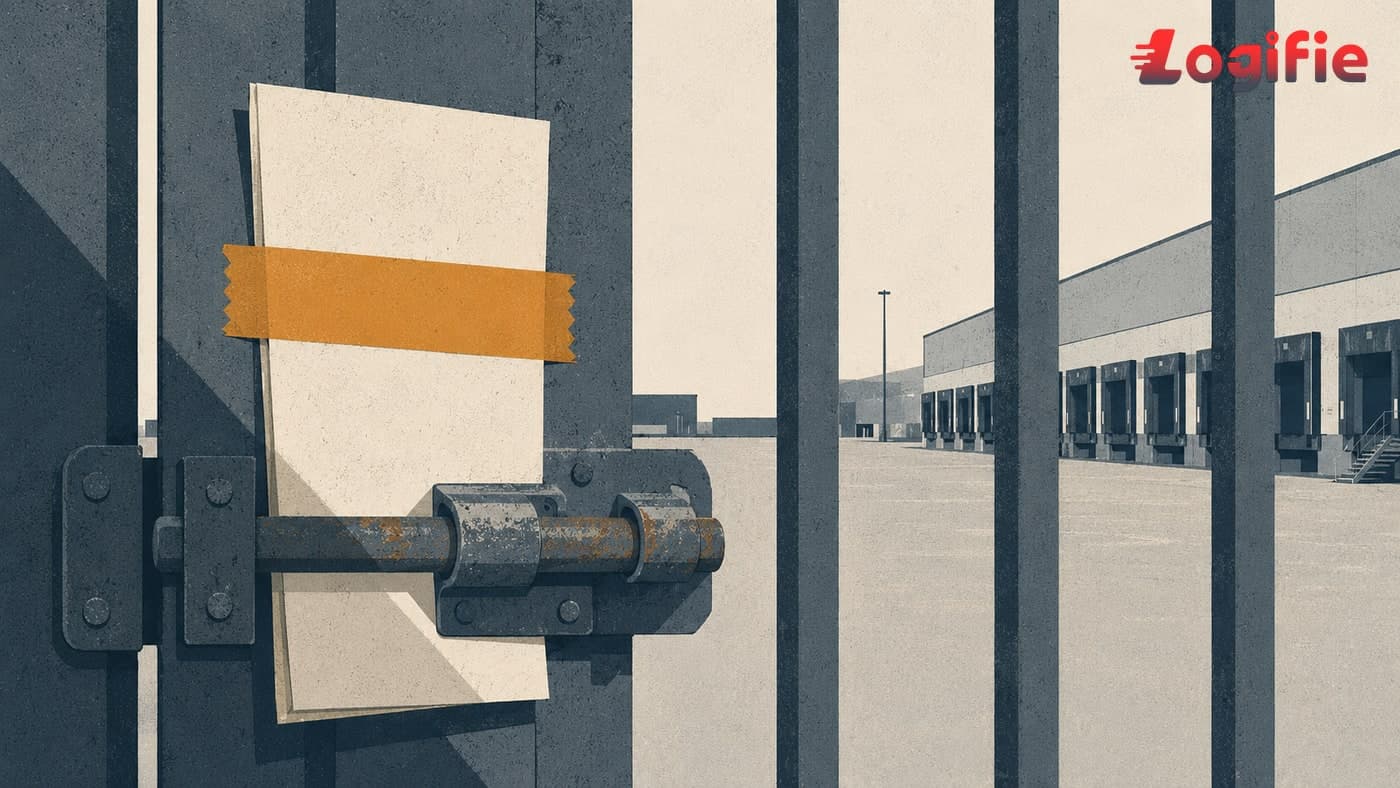
On 2026-05-20 the Nederlandse Arbeidsinspectie (NLA) imposed a two-month operating ban on an Amsterdam-based road-freight company for repeated breaches of the Wet minimumloon en minimumvakantiebijslag (WML), the Dutch Minimum Wage and Holiday Allowance Act. The suspension runs through May and June 2026 and follows EUR 280,000 in earlier fines that failed to bring the operator into compliance. For the wider sector it is a marker: Dutch enforcement is now willing to remove a haulier from the market entirely.
What the labour inspectorate found
The NLA does not name the company in its press release of 2026-05-20 , but it sets out a clear escalation path. The operator was fined EUR 127,000 in 2023 for WML breaches. A re-inspection in 2025 produced a second penalty of EUR 153,000 because the same problems persisted.
When inspectors returned again in 2026, compliance with the minimum wage could not be verified for four employees. One worker was only paid in 2025-09 for work performed in 2025-02, and the NLA treated that seven-month delay as underpayment under the WML.
Dutch outlets covering the case emphasise the broad reach of the order. Nationale Transportgids reports that the suspension covers the company's core transport activity, services it performs for third parties, and services that other firms carry out on its behalf. In effect, the business is removed from the transport market for the full two months.
Why the ban matters for cross-border operators
The WML applies to all work performed on Dutch territory regardless of the worker's nationality or the employer's country of establishment. Posted drivers and cabotage trips (short-term domestic deliveries by a non-resident operator) into the Netherlands therefore sit inside the same enforcement perimeter as domestic employment, in line with Directive (EU) 2020/1057 on the posting of drivers in road transport. Hauliers based outside NL but running into Amsterdam, Rotterdam or the Randstad cannot assume that home-country payroll arrangements close the gap.
Dutch trade press has been tracking the pattern for several months. Nieuwsblad Transport frames the suspension as the visible end of a longer escalation curve from financial penalties towards activity bans. The signal to repeat offenders is that further fines are not the ceiling.
What hauliers should review now
Operators with Dutch exposure should pull payroll records for any driver who worked in the Netherlands in the past twenty-four months and check the timing of payments, not only the headline rate. Transport Online NL notes that the NLA still relies heavily on worker tips and signals from other market participants, so a single complaint can trigger a re-inspection.
Subcontractor chains deserve the same review, because the suspension order in this case reached services carried out by other companies on the haulier's behalf. Planning teams routing into NL should also keep an eye on operational basics such as Dutch fuel pricing and public holiday calendars , since timing pressure is often where compliance corners get cut.
When the ban lifts
The ban expires at the end of June 2026, but the underlying inspection file does not close with it. The NLA can re-inspect at any point, and a further failure would land in a much harsher zone after a documented suspension.
For shippers, the practical takeaway is to ask Dutch carriers for a clean WML compliance statement before awarding work that touches the second half of 2026.
If you are planning Dutch lanes for the rest of the year and want a compliant partner from day one, request a road freight quote on logifie.com . Our team routes shipments with operators who keep their paperwork as clean as their fleet.