EU diesel relief stalls as Brent rebounds above 105 USD
EU retail diesel posted its first weekly drop since March on 2026-04-20, then stalled as Brent climbed back above 105 USD. What hauliers should do this week.

Logifie Team
Logistics Technology Experts
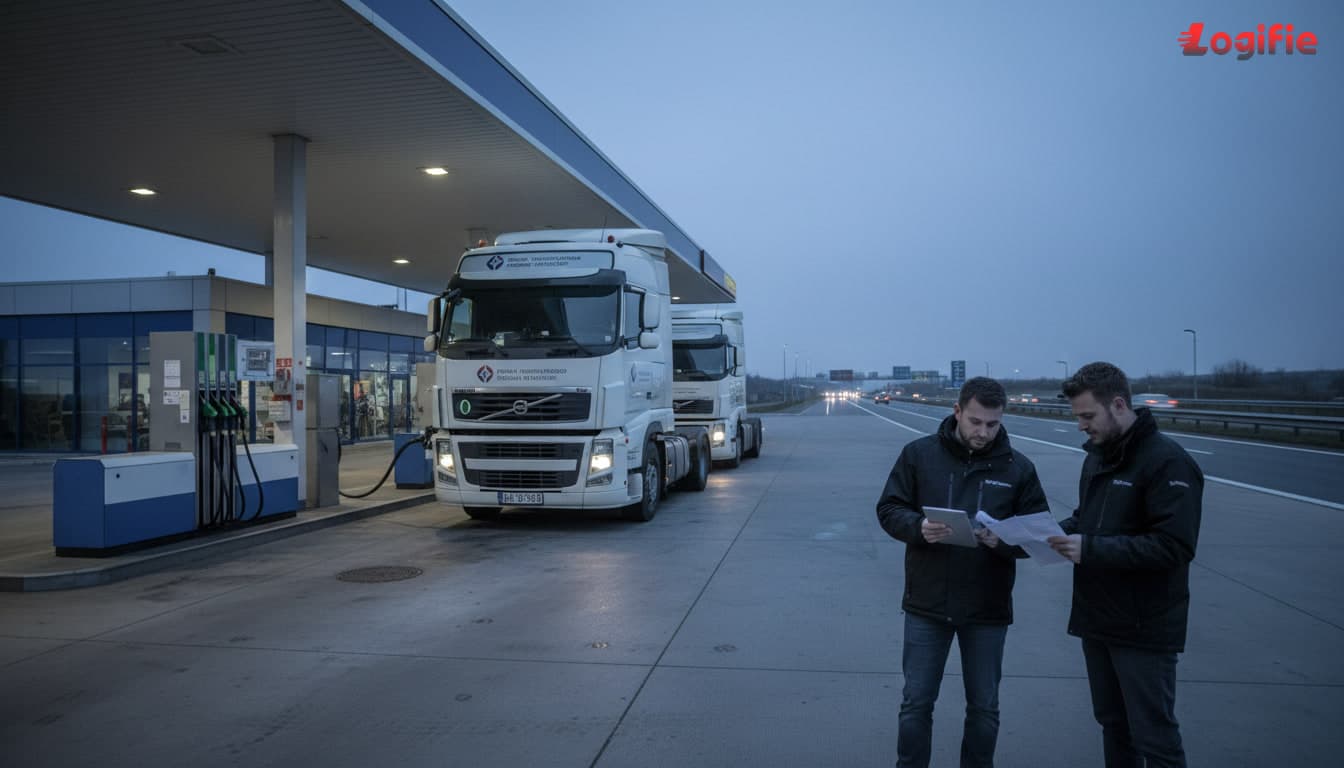
European road freight got its first breath of relief from diesel costs in nearly two months last week, and lost most of it within days. EU retail diesel averaged 1.977 EUR per litre on 2026-04-20, down from 2.07 EUR on 2026-04-13, the first week-on-week drop since the start of March. By 2026-04-24 that decline had stalled: Brent crude pushed back above 105 USD per barrel and pump prices flattened across the EU. For carriers, shippers, and forwarders running budgets to two decimal places, the message is direct. Do not bake the lower number into Q2 contracts yet.
What changed at EU diesel pumps this week
The week-on-week decline followed a brief easing in oil markets after the US-Iran ceasefire was extended indefinitely on 2026-04-21 , which briefly pulled Brent below 100 USD a barrel. National pump prices remain wide. The Netherlands stays at the top of the EU table at 2.294 EUR per litre, followed by Finland, Denmark, France, and Germany. Malta sits at the bottom at 1.210 EUR per litre because of its regulated price structure. On long-haul lanes that cross three or four price zones, that gap is the difference between a routine refuel and an active route-planning decision, and it is why the Logifie EU fuel hub is built around country-by-country pricing rather than a single average.
The downward trend reversed once Brent climbed back above 100 USD on 2026-04-22 and above 105 USD by 2026-04-24. Wholesale diesel reacts faster than retail, so the pump number is now expected to plateau, not fall further, across the next two weeks unless crude eases meaningfully.
Why the relief was short-lived
Two factors kept Brent firm even with a ceasefire on paper. First, tanker traffic through the Strait of Hormuz has not normalised , so Mediterranean refining margins are still being priced as if disruption could resume. Second, the latest Eurostat fuel update showed March 2026 already at the highest cumulative EU diesel level in three years, meaning the 2026-04-13 peak of 2.07 EUR was the top of a steep climb, not a one-off spike. A single week of softening does not reset the planning baseline.
National responses are filling the gap differently. Germany approved a 14 cents per litre net excise cut on diesel from 2026-05-01 to 2026-06-30, equal to 16.7 cents per litre at the pump including VAT, in a programme valued at up to 1.6 billion EUR. Operators with German routes can model this against current pump movements on the Logifie Germany fuel page . Spain's Royal Decreto-Ley 9/2026 , published on 2026-04-15, takes a different route: it makes fuel-cost pass-through mandatory in road-freight invoicing whenever diesel moves more than 5% between contract date and transport date, and forbids parties from waiving the clause.
What hauliers should do this week
Three concrete actions. First, do not requote outbound rates against the 1.977 EUR figure. Use the rolling four-week average from the IRU and Eurostat weekly fuel updates until Brent settles. Second, if a contract touches Spain, update template language to reference the new automatic adjustment formula in Royal Decreto-Ley 9/2026; carriers without that clause are now exposed to retroactive disputes once invoicing dates fall after 2026-04-15. Third, if a German lane runs in May or June, lock the 14 cents excise saving into surcharge math now rather than letting it erode into spot pricing — fuel savings on dedicated lanes typically get absorbed into competitive spot pricing within a few weeks of a tax intervention.
For background on how cross-border diesel volatility translates into corridor-level rate moves, the longer Logifie analysis is in EU fuel crisis cross-border diesel chaos 2026 . When you are ready to lock in a quote against the current price environment, request a quote from Logifie and the operations team will model it against today's diesel index and the new Spanish and German clauses.