EU-Multimodal-Beihilfe 2026: Folgen für die Straße
Die EU-Multimodal-Beihilfe 2026 hebt Rail- und Intermodalförderung auf 90 %. Sieh, welche Korridore, Frachtführer und Verlader betroffen sind.

Logifie Team
Logistik- und Technologie-Experten
Das Paket der Europäischen Kommission vom 16. März 2026 erlaubt den Mitgliedstaaten, förderfähige Schienen- und multimodale Frachtprojekte mit bis zu 90 % der förderfähigen Kosten zu unterstützen und verändert damit ab dem 30. März die Ausgangslage für den Straßengüterverkehr spürbar.
EU-Multimodal-Beihilfe 2026: Folgen für die Straße
Der neue EU-Multimodal-Beihilferahmen 2026 trifft auf einen Markt, in dem die Straße noch immer 78 % der innerländischen EU-Fracht bewegt. Genau deshalb ist der 30. März 2026 wichtig: Brüssel setzt nicht mehr nur auf langsame politische Impulse, sondern auf direkte finanzielle Beschleunigung für Schiene, Binnenwasserstraße und intermodale Projekte.
Für Frachtführer, Verlader und Spediteure geht es nicht darum, ob Lkw verschwinden. Entscheidend ist vielmehr, welche Korridore, Kostenmodelle und Lanes stärker unter Druck geraten, sobald Regierungen Terminals, Gleisanschlüsse und Modal-Shift-Dienstleistungen ohne monatelange Vorabmeldung fördern können. Der Druck wird gezielt und korridorespezifisch wirken, beginnt aber jetzt mit der Planung.
90%
Die Mitgliedstaaten können nach dem neuen Rahmen bis zu 90 % der förderfähigen Kosten für multimodale und Schienenprojekte übernehmen.
Was passiert ist: Beschluss am 16. März, Inkrafttreten am 30. März
Am 16. März 2026 hat die Europäische Kommission offiziell beschlossen , die Land and Multimodal Transport Guidelines sowie die Transport Block Exemption Regulation einzuführen und damit die seit 2008 geltenden Beihilferegeln zu ersetzen. Das neue Paket gilt ab dem 30. März 2026, während die TBER bis zum 31. Dezember 2034 gültig bleibt.
Das alte System war eng gefasst und gedeckelt: Es richtete sich vor allem an Eisenbahnbetreiber und begrenzte die Förderung auf 50 % der förderfähigen Kosten. RailFreight.com berichtete , dass der neue Rahmen die Obergrenze fast verdoppelt und den Zugang für Logistikunternehmen, Spediteure, multimodale Verkehrsunternehmen, Rangierunternehmen und Fahrzeughalter erweitert, die sich für Schiene statt Straße entscheiden.
Besonders operativ relevant ist die TBER, weil sie die Pflicht zur vorherigen Einzelmeldung für viele Schienen-, Binnenwasser- und multimodale Maßnahmen abschafft. trans.info fasste zusammen , dass Regierungen dadurch bei Terminals, Gleisanschlüssen, neuen Verbindungen und Umschlagtechnik deutlich schneller handeln können.
Am stärksten betrifft das erste und letzte Meile auf der Straße, die an intermodale Systeme gekoppelt ist. Die Kommission selbst hob private Gleisanschlüsse als Möglichkeit hervor, den Bedarf an kurzen Zubringer-Lkw-Fahrten zu senken, was die Veränderung für Straßenoperatoren in railnahen Industriegebieten weit weniger theoretisch als konkret macht.
Die zentrale Änderung ist nicht nur die 90-%-Fördergrenze. Entscheidend ist, dass förderfähige Projekte jetzt mit deutlich weniger Verwaltungsaufwand vorankommen und damit das Reaktionsfenster für lange Straßennetze schrumpft.
Die Zahlen: Was Brüssel verändern will
Das Modal-Split-Bild zeigt, warum Brüssel auf finanzielle Hebel statt auf eine weitere Runde weicher Appelle setzt. Die Straße dominiert den Binnenfrachtverkehr weiterhin, während die Schiene trotz jahrelanger Politik und Green-Transition-Rhetorik.
78%
Eurostat-Daten für 2023 zeigen, dass die Straße bei den innerländischen Tonnenkilometern in der EU weiterhin dominiert.
50%
Der alte Rahmen von 2008 begrenzte die Förderung auf die Hälfte der förderfähigen Projektkosten.
2034
Die neue Gruppenfreistellung gilt bis zum 31. Dezember 2034 und schafft damit einen langen Planungshorizont.
| Kennzahl | Wert | Quelle |
|---|---|---|
| Anteil der Straße an der EU-Binnenfracht (2023) | 78 % der Tonnenkilometer | Eurostat |
| Anteil der Schiene an der EU-Binnenfracht (2023) | 17 % der Tonnenkilometer | Eurostat |
| Straßenfrachtvolumen der EU (2024) | 1.867 Milliarden Tonnenkilometer | Eurostat |
| EU-Ziel für den Schienengüterverkehr bis 2030 | 30 % Modalanteil | EU Green Deal |
| Bisherige maximale Förderung für Schiene | 50 % der förderfähigen Kosten | EU-Kommissionsleitlinien 2008 |
| Neue Förderobergrenze für Schiene und Multimodal | 90 % der förderfähigen Kosten | EU-LMTG 2026 |
| Jährlicher Investitionsbedarf für Schieneninfrastruktur | 16,5 Mrd. EUR | Europäische Investitionsanalyse |
| Jährlicher Investitionsbedarf für Intermodalanlagen | 1,5 Mrd. EUR | Europäische Investitionsanalyse |
| Gültigkeit der TBER | Gültig bis 31.12.2034 | Europäische Kommission |
Eurostats Eurostat-Daten zum Modal Split zeigen, dass die Straße in den letzten zehn Jahren Marktanteile gewonnen hat, während die Schiene zurückgefallen ist. Das macht das neue Paket zu Brüssels bisher stärkstem Versuch, den Modal Shift mit staatlich gestütztem Kapitaleinsatz zu beschleunigen, statt auf reine Marktkräfte zu warten.
Welche Korridore stehen unter dem größten Modal-Shift-Druck
Nicht jede Straßenrelation ist gleich exponiert. Intermodale Wirtschaftlichkeit funktioniert am besten dort, wo Distanz, Terminalanbindung und subventionierte Infrastruktur zu einer glaubwürdigen Service-Alternative werden. Das größte Risiko liegt auf Trassen, bei denen Regierungen mit dem neuen Rahmen Projekte schneller fördern können, die zuvor zu langsam oder zu teuer gewesen wären.
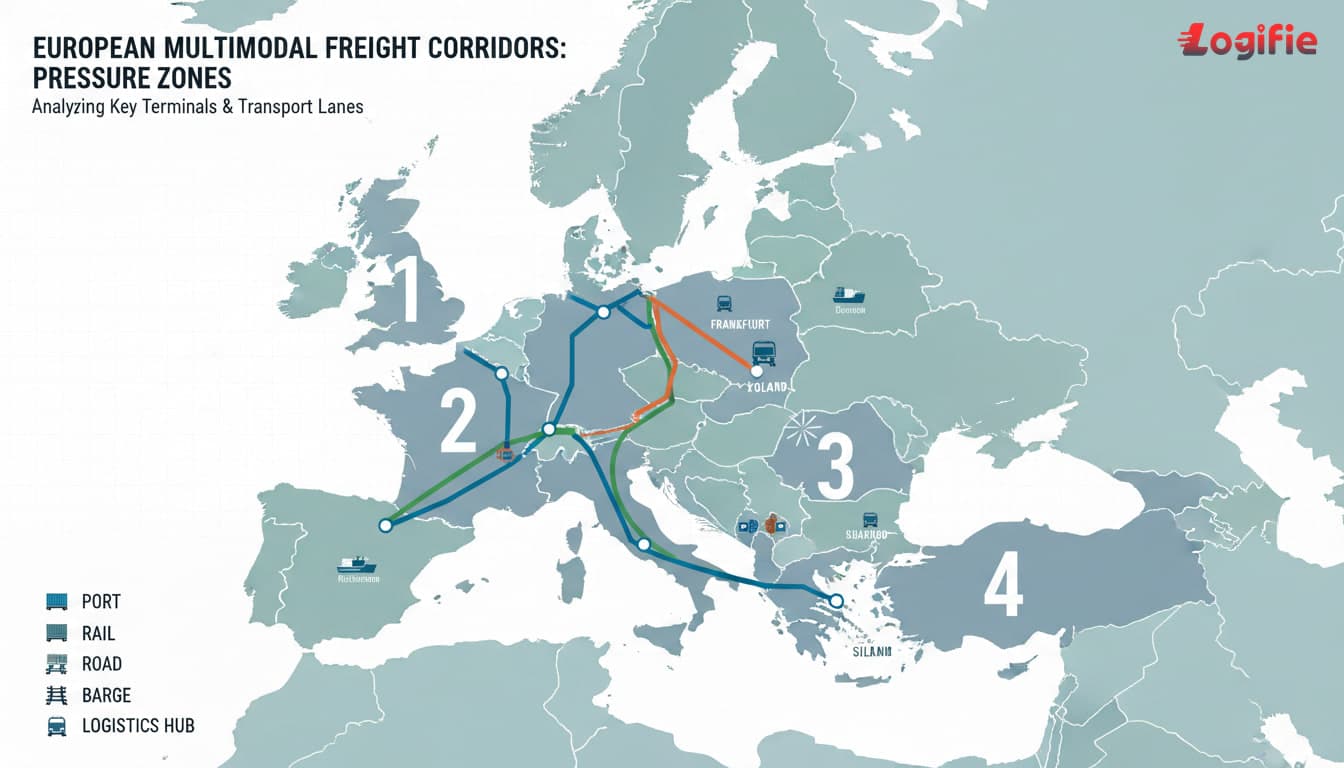
Deutschland-Italien über den Brenner
Die Brenner-Achse ist längst ein Brennpunkt des Modal Shift, weil hohe grenzüberschreitende Volumina, alpine Einschränkungen und etablierte Kombiverkehrsmuster Subventionen schnell in den Markt tragen. Wenn Österreich und Deutschland Terminal- oder Gleisanschlussförderung beschleunigen, geraten langfristige Straßentransporte auf dieser Relation früher unter Preisdruck als auf den meisten anderen Korridoren.
Deutschland-Spanien und Deutschland-Frankreich
Diese Langstreckenachsen liegen im Bereich von 1.200 bis 1.600 km, in dem kombinierte Straßen-/Schienenmodelle wirtschaftlich sinnvoll werden, sobald die Infrastrukturförderung verbessert wird. Schnellere Finanzierung von Terminals, Schnittstellen und Umschlagtechnik kann aus bisher grenzwertigen Intermodalideen echte Ausschreibungsoptionen für Verlader machen.
Polen-Deutschland-Benelux
Die Achse Polen-Deutschland-Westeuropa ist die wichtigste Volumenstory, weil Polen allein 20 % der EU-Straßenfracht in Tonnenkilometern erzeugt . Jede subventionsgestützte Ausweitung intermodaler Umschläge auf diesem Korridor würde den Lkw nicht über Nacht verdrängen, könnte aber Tender-Dynamik, Linehaul-Preise und Kapazitätsplanung im volumenstärksten grenzüberschreitenden Markt der EU.
Rhein- und Donau-Wasserstraßenkorridore
Die neuen Regeln erfassen auch den Binnenschifffahrtsverkehr, was wichtig ist, weil wasserstraßengebundene Netze sowohl Langstrecken-Lkw als auch Zubringerfahrten verdrängen können, wenn die öffentliche Förderung Terminals und Anschlüsse verbessert. Für Straßenoperatoren rund um Rotterdam, Köln, Basel, Wien, Bratislava, Budapest und rumänische Donauknoten bedeutet das selektiven Wettbewerb an den Rändern ihres aktuellen Leistungsportfolios.
Das höchste Risiko haben Korridore, in denen große Distanzen, hohe Volumina und starke Terminal-Ökosysteme zusammentreffen. Wo diese drei Faktoren zusammenkommen, können die neuen Beihilferegeln Ausschreibungen schneller verändern, als viele Frachtführer erwarten.
Was der TBER-Schnellweg für den Wettbewerb im Straßengüterverkehr bedeutet
"Private Gleisanschlüsse spielen eine Schlüsselrolle dabei, den Bedarf an erster und letzter Meile auf der Straße für Fracht zu verringern."
- Europäische Kommission
Vor der TBER musste ein Mitgliedstaat häufig eine Notifizierung vorbereiten und auf die Genehmigung aus Brüssel warten. Dieser Prozess wirkte als bürokratische Bremse für Investitionen in den Kombiverkehr. Die neue Gruppenfreistellung reduziert diese Reibung und erlaubt Regierungen, förderfähige Maßnahmen mit kommerziell brauchbarer Geschwindigkeit freizugeben.
Das ist relevant, weil der Straßengüterverkehr bereits auf einer effizienten privaten Asset-Basis aus Lkw, Depots, Trailern und Disposition läuft. Schienen- und Wasserstraßensysteme brauchen koordinierte Infrastrukturinvestitionen, daher bewirkt der neue Rahmen vor allem, dass diese Investitionen für Regierungen und Terminalbetreiber weniger riskant werden. Förderungen für neue Dienste können außerdem bis zu fünf Jahre laufen, was lang genug ist, um Routen zu testen, die zuvor keine private Finanzierung fanden.
Für Straßenoperatoren liegt die größte kurzfristige Exposition im 300- bis 1.000-km-Bereich, in dem die Linehaul-Ökonomie bereits nah genug an der Intermodalität liegt, damit sinkende Infrastrukturkosten den Ausschlag geben können. Deshalb sollten Betreiber die Reform als frage des lane-spezifischen Pricings behandeln und nicht nur als Politmeldungsstory.
- Terminalprojekte können schneller marktreif werden und dadurch Beschaffungspläne der Verlader verschieben.
- Private Gleisanschlüsse und Umschlagtechnik können die Nachfrage nach kurzen Zubringer-Lkw im Umfeld railnaher Industriestandorte schwächen.
- Förderungen für Dienste über bis zu fünf Jahre geben Regierungen Zeit, neue multimodale Korridore vor ihrer vollständigen Wirtschaftlichkeit zu testen.
Kostenfolgen für Verlader und Logistikmanager
Für Verlader ist die wichtigste Konsequenz, dass der neue Rahmen einen Planungsimpuls statt eines sofortigen Kostenschocks erzeugt. Intermodale Alternativen brauchen weiter Zeit, um operativ zu werden, aber sobald Finanzierungsentscheidungen fallen, sehen Beschaffungsteams auf langen Relationen mehr glaubwürdige Alternativen in Ausschreibungen und Budget-Szenarien.
- Potenzial nach oben sind stärkere intermodale Preiswettbewerbe auf langen Trassen wie Deutschland-Spanien, Deutschland-Italien und Polen-Westeuropa.
- Kurzfristige Realität ist, dass die Straße dominiert, weil die EU ihr 30-%-Schienenziel noch deutlich verfehlt und der Infrastrukturausbau Jahre braucht.
- Transitzeit-Trade-off hält die Straße für zeitkritische Fracht, Just-in-Time-Produktion und Sendungen attraktiv, die auf Echtzeit-Transparenz der Sendung über Grenzen hinweg angewiesen sind.
- Druck durch CO2-Reporting wird einige Verlader dazu bringen, frühzeitig emissionsärmere Modi zu pilotieren, wenn CSRD- und Scope-3-Anforderungen strenger werden.
Deshalb sollte die Budgetplanung Lane-Ökonomie, Servicelevel und Kraftstoffkosten-Transparenz zusammen betrachten. Teams, die Straßen- und Intermodalszenarien vergleichen, sollten reale Dieselinputs über Logifies Kraftstoffpreis-Hub verfolgen und prüfen, welche Korridore in den nächsten zwei bis fünf Jahren realistisch mehr Schiene oder Binnenschiff aufnehmen können.
16,5 Mrd. EUR
Branchenanalysen zufolge braucht Europa weiterhin jährlich 16,5 Milliarden Euro für Schieneninfrastruktur, um die Modal-Shift-Ziele zu erreichen.
Die pragmatischste Reaktion für Verlader ist, die Reform als Korridor-Screening zu behandeln und Intermodalität nur dort zu pilotieren, wo Servicezuverlässigkeit, CO2-Vorteile und Gesamtkosten den Wechsel rechtfertigen.
Was Straßencarrier jetzt tun sollten
Der neue Rahmen erzeugt keinen sofortigen Schock, aber er schafft einen mehrjährigen strategischen Gegenwind für Betreiber mit Fokus auf Langstrecken-FTL-Korridoren. Die richtige Antwort ist, Preisgestaltung, Lane-Monitoring und Service-Differenzierung zu schärfen, bevor subventionsgestützte Alternativen in Ausschreibungen verankert werden.
- Korridor-Exposition kartieren, indem Lanes über 500 km mit hoher Terminaldichte und grenzüberschreitenden Volumina identifiziert werden.
- Umsetzung auf Mitgliedstaatenebene beobachten ab April 2026, vor allem in Deutschland, Frankreich, Polen, Spanien, Italien, Österreich und Benelux.
- Über Geschwindigkeit und Flexibilität differenzieren dort, wo die Straße bei Buchungsagilität, Door-to-Door-Transit und Störungsresilienz weiterhin besser ist als die Schiene.
- Langstrecken früh neu kalkulieren, bevor intermodale Piloten die Erwartungshaltung in Ihren größten Korridoren verändern.
- First- und Last-Mile-Partnerschaften anbieten, weil das Wachstum der Intermodalität weiterhin auf der Straße rund um Terminals und Gleisanschlüsse beruht.
- ETA-Transparenz verbessern samt kundenorientiertem Tracking , das den operativen Vorteil der Straße sichtbar macht.
- CO2-Daten in Verkaufsgespräche einbringen, damit Verlader die Gesamtleistung der Supply Chain und nicht nur Emissionen isoliert vergleichen.
- Kalenderrisiken einplanen und dabei Feiertagsstörungen berücksichtigen, die multimodale Fahrpläne beeinträchtigen können.
- Nicht nur auf Langstrecken-FTL setzen, wenn Ihr Portfolio stark auf Korridore konzentriert ist, die sich für Intermodalität eignen.
- Förderfähigkeit prüfen falls Ihr Geschäft bereits Schiene, Binnenschiff, Rangier- oder terminalnahe Leistungen umfasst, die unter den erweiterten Regeln begünstigt sein könnten.
FAQ
Was sind die EU Land and Multimodal Transport Guidelines (LMTG)?
Die LMTG sind der neue Beihilferahmen der Kommission für Schiene, Binnenwasserstraßen und multimodale Fracht. Sie wurden am 16. März 2026 beschlossen, ersetzen die Regeln von 2008 und heben die Beihilfeintensität auf bis zu 90 % der förderfähigen Kosten an, während der Kreis der Begünstigten über reine Eisenbahnunternehmen hinaus auf Logistik- und Transportakteure erweitert wird, die sich für nichtstraßengebundene Modi entscheiden.
Wie wirkt sich EU-Beihilfe 2026 auf den Straßengüterverkehr aus?
Sie reguliert Straßencarrier nicht direkt, verändert aber das Wettbewerbsumfeld, weil sie intermodale und wasserstraßengebundene Projekte leichter finanzierbar und schneller umsetzbar macht. Der Effekt wird eher schrittweise als sofort sichtbar sein, mit dem stärksten Druck auf Langstrecken über etwa 500 km.
Werden EU-Schienenförderungen die Lkw-Nachfrage in Europa senken?
Nicht dramatisch kurzfristig, weil die Straße weiterhin 78 % der EU-Binnenfracht trägt und die Infrastruktur weiterhin zu weit hinter dem Ziel liegt. Das realistische Szenario ist selektiver Modal Shift auf den stärksten Korridoren und kein plötzlicher Einbruch der Lkw-Volumina im gesamten europäischen Markt.
Fazit
Das neue EU-Beihilfepaket für multimodale Fracht ist ein struktureller Wandel in der Art und Weise, wie Europa den Güterverkehr schrittweise von der Straße weg verschieben will. Mit einer 90-%-Fördergrenze und einem schnelleren Genehmigungsweg hat Brüssel deutlich stärkere Instrumente geschaffen als das Rahmenwerk, unter dem die Branche seit 2008 gearbeitet hat.
Die Straße wird noch Jahre dominieren, aber Frachtführer und Verlader, die Korridorrisiken beobachten, Servicequalität absichern und Marktinformationen im Blick behalten, sind besser aufgestellt als jene, die den 30. März 2026 nur als weitere Brüsseler Schlagzeile abtun.
Neue EU-Beihilfeleitlinien erhöhen die Förderquote auf 90 %
Die Kommission beschließt neue Beihilferegeln zur Förderung nachhaltigerer Verkehrsträger
EU schafft schnelleren Zugang zu Fördermitteln für multimodale Fracht
Frachttransportstatistik - Modal Split
Der Straßengüterverkehr in der EU steigt 2024 um 0,6 %
Marktgröße des europäischen Straßengüterverkehrs
Europäische Investitionen in den Schienengütermarkt und die Intermodalität