Germany A3: 52% of trucks fail Hesse spot check in May 2026
On 29 May 2026, BALM and Hesse police found 52% of trucks failing spot checks on the A3 motorway, collecting EUR 41,000 in deposits in eight hours.

Logifie Team
Logistics Technology Experts
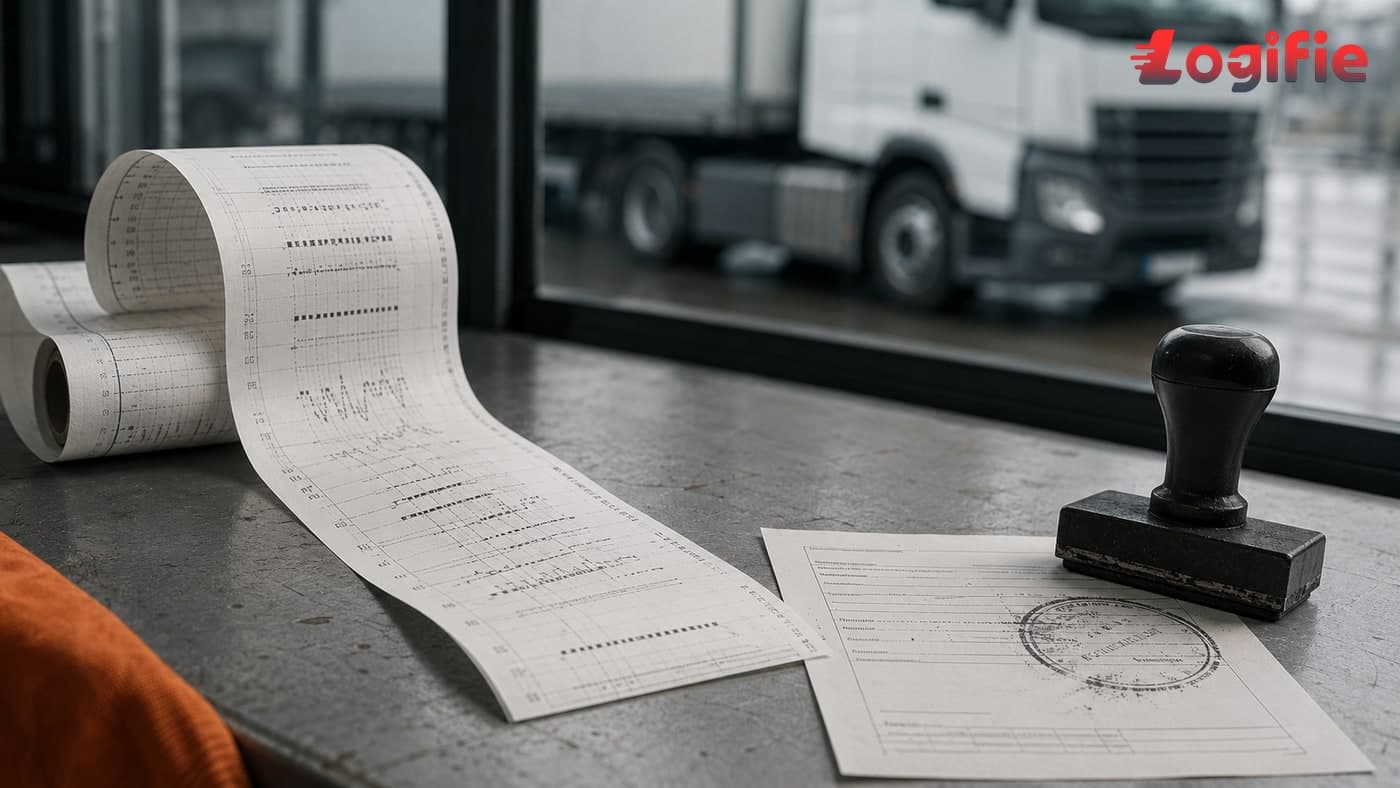
German traffic police and federal logistics inspectors stopped 91 commercial vehicles on the A3 motorway in Hesse on 2026-05-29, finding violations in more than half — and collecting over EUR 41,000 in on-the-spot deposits in a single eight-hour sweep. The result, confirmed by the Polizeipräsidium Südosthessen in an official press release , shows that enforcement on one of Germany's busiest freight corridors remains active.
What the inspection found
The operation ran from 08:00 to 16:00 at the Weiskirchen Nord service area on the A3 near Rodgau-Weiskirchen, with officers working in the direction of Cologne. The Verkehrsinspektion des Polizeipräsidiums Südosthessen led the check, drawing support from police in Bavaria, Baden-Württemberg and Rhineland-Palatinate, as well as customs officials and inspectors from BALM, the Federal Office for Logistics and Mobility .
Of 78 trucks, 8 passenger cars and 5 coaches examined, 52% had at least one violation. Inspectors recorded 59 breaches of drivers' hours and social rules, 19 cases of serious technical defects, and 9 load securing violations. Nine vehicles were banned from continuing their journey. Three criminal offences were also detected, and total on-the-spot deposits exceeded EUR 41,000. For context, BALM's coordinated nationwide targeted checks across Germany in April 2026 produced EUR 162,726 in fines and deposits over an entire month from 440 inspectors at 95 control sites. The Weiskirchen Nord check alone accounted for roughly a quarter of that monthly total.
The most serious cases
The largest single deposit — EUR 12,000 — was levied against a Greek tractor-trailer combination whose driver had accumulated repeated violations of maximum driving time and had not taken the mandatory rest periods required under EU social rules. The vehicle was taken out of service immediately.
A Dutch car transporter loaded with three caravan trailers was found to exceed the maximum permitted overall length. The driver attempted to rearrange the load at the roadside, but the combination still did not comply. The vehicle was banned from continuing and police opened asset-recovery proceedings alongside a EUR 2,940 deposit. A Latvian tractor-trailer presented serious braking defects on its trailer; documents showed the same fault had been flagged at a check in Switzerland just days before, raising concerns about the quality of the subsequent repair. The operator paid EUR 600.
Environmental enforcement also featured. Inspectors found an AdBlue emulator hidden in a Bulgarian light commercial vehicle — a device that falsifies exhaust-treatment readings and disguises the vehicle's true emissions. The van was banned from the road, a EUR 1,000 fine was issued, and the vehicle had to be towed from the rest area. A Turkish truck carrying a tank load that exceeded the 1,500-litre dangerous goods threshold drew EUR 1,300 in deposits. Two coaches — one from Bosnia and Herzegovina en route to Dortmund, one from Bulgaria — were stopped for serious violations of drivers' hours records; both coaches were banned from continuing their journey immediately, and passengers had to wait for a replacement vehicle. Deposits of EUR 3,600 and EUR 2,500 were set respectively.
What operators on German routes should expect
BALM conducts more than 500,000 truck and bus inspections across Germany each year. Its three current enforcement priorities are cabotage rule compliance, the ban on taking regular weekly rest in the cab, and roadworthiness. In April 2026, BALM's targeted checks produced 1,436 cabotage verifications (51 irregularities) and 313 cab-rest checks (63 serious violations). Drivers' hours violations are prosecuted under EU Regulation 561/2006 on driving times , which sets maximum daily driving limits and mandatory rest requirements for all HGV operators across the EU.
The Weiskirchen Nord result shows fleets using the A3 — and the broader German motorway network — that drivers' hours violations, technical defects and load securing remain the most common failings. For operators dispatching vehicles on north–south freight corridors through Hesse, the combination of coordinated multi-agency checks and high deposit levels means non-compliance carries immediate financial risk. Logifie's Germany truck information guide covers the key rules in force on German routes.
Get a Logifie freight quote to understand how compliance planning integrates with your transport cost management.