Groupage vs. Full Truck Load: What's Best for Your European Freight?
When planning road transport in Europe, shippers must decide whether to book a full truck or share space with others. Full truck load (FTL) and groupage (or less-than-truckload, LTL) are two distinct service models with...

Logifie Team
Logistics Technology Experts
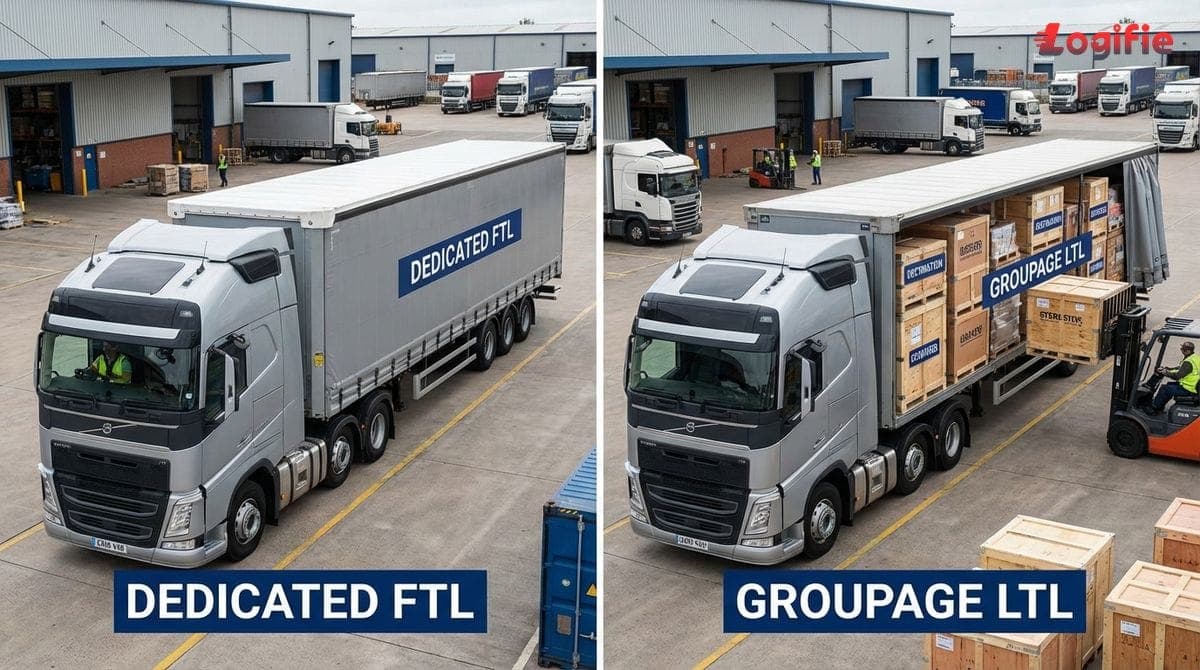
When planning road transport in Europe, shippers must decide whether to book a full truck or share space with others. Full truck load (FTL) and groupage (or less-than-truckload, LTL) are two distinct service models with different cost structures, transit times and risk profiles. Understanding the trade-offs helps businesses choose the right solution for each shipment.
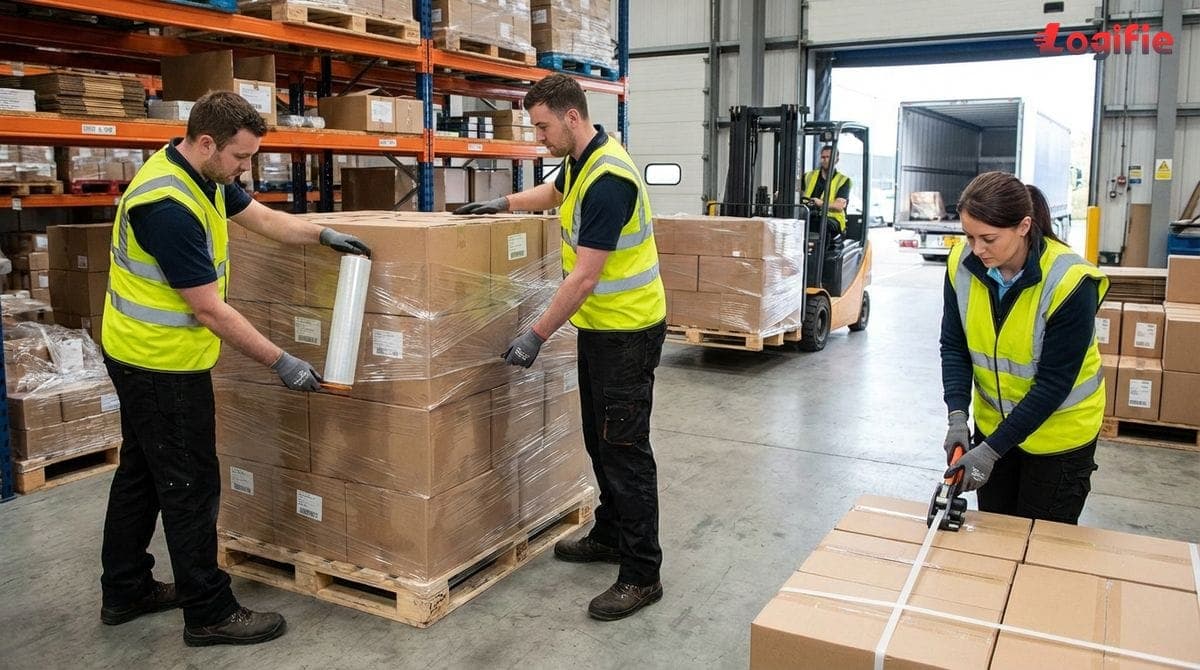
What Is Full Truck Load (FTL)?
An FTL shipment occupies an entire trailer or truck. The vehicle transports a single customer's goods from origin to destination without consolidating with other consignments. FTL is ideal for large loads, high-value goods or time-critical deliveries because:
- Faster transit times: The truck travels directly to the destination with no intermediate stops for consolidation or deconsolidation. Vans up to 7.5 tonnes can deliver next day up to 550 km, within 2 days for 550-1,300 km, and 3-4 days for longer distances (Visline Sp. z o.o., 2024).
- Less handling: Goods are loaded once and unloaded once, reducing risk of damage.
- Security: Because the truck carries only one shipper's cargo, there is less chance of loss or contamination.
However, FTL is more expensive on a per-kilometre basis because the shipper pays for the entire vehicle regardless of whether it is fully utilised. It may also be inefficient for smaller consignments that do not fill a trailer.
What Is Groupage (LTL)?
Groupage - also called less-than-truckload - combines multiple small consignments from different shippers into a single truck. Each customer pays for the space their cargo occupies. Groupage is often used for shipments under 2,500 kg (FERCAM S.p.A., 2024). Benefits include:
- Lower cost: Shared capacity reduces cost per pallet or kilogram because the total transport cost is divided among several shippers.
- Sustainability: Consolidating loads reduces empty space and improves vehicle utilisation, cutting emissions.
The trade-offs are longer transit times and more handling. Groupage vehicles stop at consolidation hubs to load and unload consignments. According to Visline's guidelines, partial loads may take 3-6 days to deliver regardless of distance (Visline Sp. z o.o., 2024). Additional handling increases the risk of damage, so proper packaging and palletisation are critical.
When to Use Groupage and When to Use FTL
Choose FTL when:
- The shipment volume approaches or exceeds 10-13 pallets or weighs more than ~2.5 tonnes.
- Goods are high value, fragile or time-sensitive.
- Direct delivery with minimal handling is critical.
- Security or confidentiality is a priority.
Choose Groupage when:
- Shipping a small number of pallets or parcels that do not justify a full truck.
- Cost savings outweigh the need for speed.
- Transit time flexibility is acceptable.
- Sustainability and reducing carbon footprint are priorities.
Hybrid Options
Some logistics providers offer part load or LTL-FTL hybrid services: the truck may carry two or three partial loads, balancing cost and speed. This can be a good compromise when a shipment is too big for parcel services but too small for a dedicated vehicle.
Factors to Consider
- Weight and volume: Compare the cost of FTL vs. groupage for the specific load size.
- Urgency: If delivery speed is critical, FTL might be worth the extra cost.
- Value and fragility: High-value or delicate goods may justify the additional security of FTL.
- Budget: Small businesses with tight budgets often choose groupage to spread the cost.
- Environmental goals: Consolidation reduces empty kilometres and emissions.
- Seasonality and capacity: During peak seasons, FTL capacity may be scarce and expensive; groupage may offer more flexibility.
Conclusion: Match the Mode to the Mission
Deciding between full truck load and groupage depends on more than just price. FTL offers speed, security and simplicity but at a higher cost, whereas groupage maximises efficiency and lowers emissions at the expense of longer lead times. Evaluate the size, value, timing and sustainability goals of each shipment. A forwarder like Logifie can advise on the best option and arrange hybrid solutions when appropriate.
Sources
European road freight options explained (Uniserve Group, 2025) - Defines full truck load (FTL) and less-than-truckload/groupage, explaining that FTL uses the entire vehicle for one shipment with faster transit and less handling, while groupage consolidates smaller consignments to reduce cost but increases transit time.
FTL, LTL and groupage: definitions and differences (FERCAM S.p.A., 2024) - Explains that groupage shipments usually weigh up to 2,500 kg and are consolidated at hubs, resulting in longer delivery times but lower costs.
How to calculate transit time for cargo across Europe (Visline Sp. z o.o., 2024) - Provides transit time estimates for dedicated FTL transports (vans up to 550 km next day, 550-1,300 km within two days, over 1,500 km within 3-4 days) and notes that partial loads may take 3-6 days.