Ölpreisschock-Playbook: Wie europäische Logistikmanager auf die Instabilität im Nahen Osten reagieren sollten
Die Instabilität im Nahen Osten löst in ganz Europa einen Ölpreisschock aus. Erfahren Sie, wie Logistikmanager mit Dieselvolatilität, Kraftstoffzuschlägen und Routing-Entscheidungen umgehen sollten.

Logifie Team
Experten für Logistiktechnologie
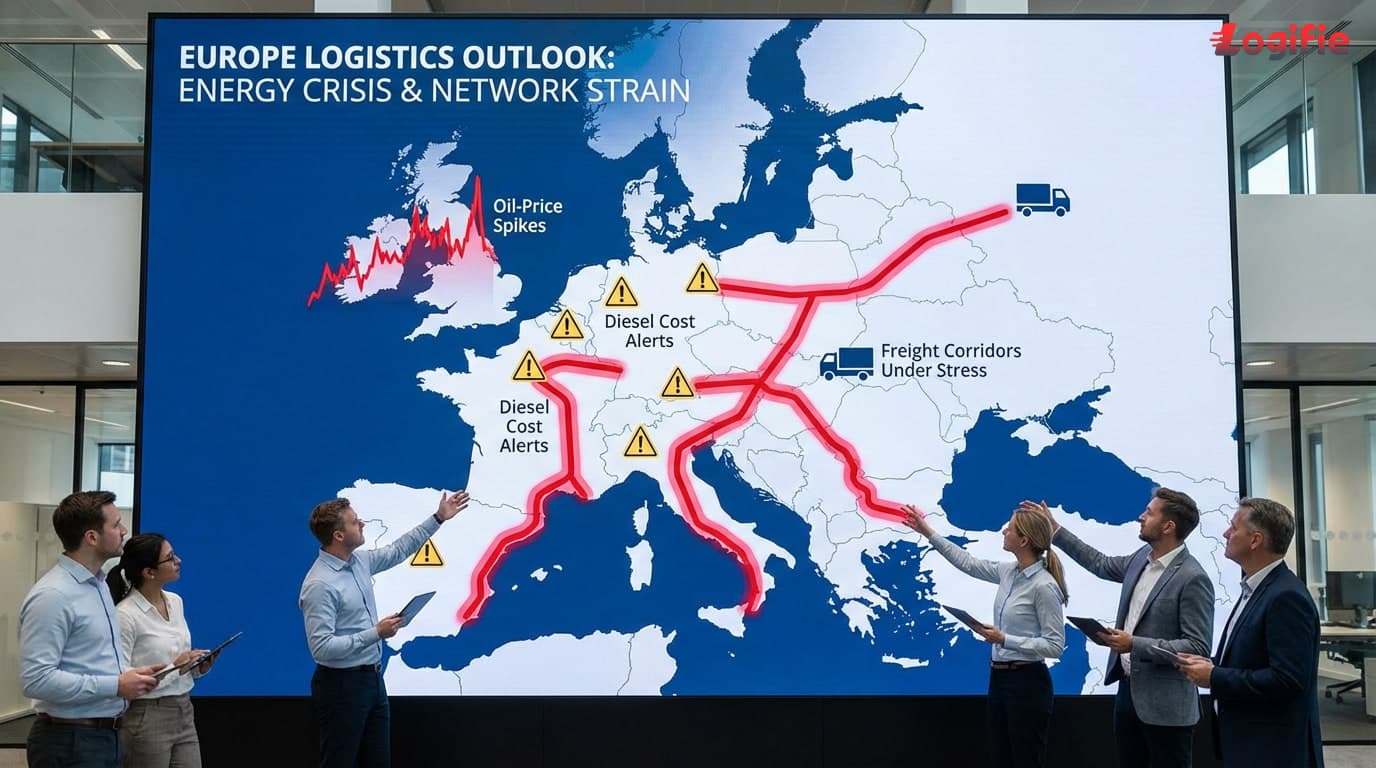
Seit der Eskalation im Nahen Osten am 28. Februar 2026 ist der Ölpreisschock von einer Rohstoff-Schlagzeile zu einem Pricing-Problem auf Lane-Ebene für europäische Logistikteams geworden. Wenn Sie Kraftstoffpreise in Europa verfolgen, ist der Grund operativ: Brent-Risiko, Dieselbewegungen an der Zapfsäule und länderspezifische politische Reaktionen beeinflussen jetzt Angebotsgültigkeit, Routing-Entscheidungen und den Einkaufszeitpunkt.

Warum dieser Ölpreisschock für europäische Logistikmanager jetzt relevant ist
Die Straße von Hormus ist relevant, weil sie keine Nischenroute ist. Nach Angaben der U.S. Energy Information Administration wurden 2023 täglich 20.9 Millionen Barrel durch diesen Engpass transportiert, also etwa ein Fünftel des weltweiten Verbrauchs an Petroleum Liquids. Sobald Angriffe, Umroutungen und sicherheitsbedingte Sperrungen diesen Korridor treffen, zahlen europäische Dieseleinkäufer eine globale Risikoprämie, unabhängig davon, ob ihre Lkw jemals in die Nähe des Golfs kommen oder nicht.
Diese Prämie kam schnell. IRU berichtete, dass Brent von rund USD 70 vor dem Konflikt bis zum 5. März auf etwa USD 85 stieg, während die EIA mitteilte, dass Brent am 9. März nach geringeren Hormus-Lieferungen bei USD 94 pro Barrel schloss. Gleichzeitig sagte die Europäische Kommission, dass es dank Notstandsreserven keinen unmittelbaren physischen Versorgungsengpass gebe, aber das schützt nur die Verfügbarkeit. Dieselpreise oder Frachtbudgets friert das nicht ein.
Was der Markt in Europa bereits zeigt
Die frühen Warnsignale sind bereits in den europäischen Zapfsäulendaten sichtbar. IRU sagte, dass die Kraftstoffpreise an der Zapfsäule bis zum 5. März 2026 europaweit nach oben gedreht hatten, und das Weekly Oil Bulletin der Kommission bleibt der sauberste Benchmark, um zu bestätigen, wie schnell sich Diesel von Land zu Land bewegt.
Die Komplikation für Transportmanager besteht darin, dass Europa nicht einheitlich reagiert. Berichte von Trans.info zeigen, dass einige mittel- und osteuropäische Länder Preise vorübergehend deckeln oder dämpfen, während westliche Märkte überwiegend abwarten. Das schafft spürbare grenzüberschreitende Betankungsunterschiede und macht einen allgemeinen EU-Durchschnitt weniger nützlich als lane-spezifische Kraftstoffplanung.
Wie der Schock Frachtofferten und Zuschläge erreicht
Die meisten Einkäufer sehen keine Position namens geopolitischer Ölpreisschock. Sie sehen schneller reagierende Kraftstoffklauseln, kürzere Angebotsgültigkeiten und überarbeitete Zuschlagstabellen. Logifies Leitfaden zu Kraftstoffzuschlägen und Maut erklärt die Mechanik: Wenn sich Diesel-Benchmarks bewegen, folgen die Frachtrechnungen.
Die Kostenweitergabe ist spürbar, noch bevor ein kompletter monatlicher Rebid ansteht. Deutsche Branchenberichte, auf die sich Trans.info bezieht, sagen, dass ein Dieselanstieg von 10% die gesamten Betriebskosten eines Carriers um rund 3% erhöht. In einem margenschwachen Markt reicht das aus, um Notfall-Preisgespräche, breitere Spotraten und eine strengere Prüfung jeder Festpreisverpflichtung auszulösen.
Was Transporteinkäufer diese Woche tun sollten
Behandeln Sie das als Einkaufsworkflow und nicht als Schlagzeile, die man nur passiv beobachtet. Nutzen Sie Logifies Angebotsseite , wenn Sie einen frischen Lane-Check brauchen, und stimmen Sie intern ab, welcher Benchmark und welche Prüffrequenz Preisgespräche auslösen sollten.
- Überwachen Sie Carrier-Kraftstoffzuschläge wöchentlich, statt bis zur überraschenden Monatsendrechnung zu warten.
- Routen Sie effizient und beseitigen Sie vermeidbare Kilometer, Leerlauf und Umwege auf den kraftstoffsensibelsten Lanes.
- Prüfen Sie praktikable Formen des Kraftstoffrisikoschutzes, ob indexgebundene Klauseln, begrenztes Hedging oder Budgetreserven.
- Reduzieren Sie Leerfahrten und schützen Sie die Auslastung, damit jeder disponierte Lkw bei gleichem Kraftstoffaufwand mehr Umsatz trägt.
- Passen Sie Budgets und Kundenverträge jetzt an, bevor ein vorübergehender Peak zu einem Margenproblem wird, das erst in den Aprilrechnungen sichtbar ist.
Länderspezifische Preisunterschiede, Routing-Entscheidungen und Betankungsdisziplin
Grenzüberschreitende Disziplin wird wichtiger, wenn sich Preisunterschiede ausweiten. Nutzen Sie aktuelle Kraftstoffseiten , um zu planen, wo getankt werden sollte, und kombinieren Sie das mit dem Feiertagsplaner , damit Fahrer wegen Grenzstaus, Feiertagsschließungen oder verpasster Zeitfenster nicht zu teuren Last-Minute-Betankungen gezwungen werden.
Kraftstoff ist nur ein Teil des Kostenstapels. Straßengebühren-Druck, wie er in Logifies Artikel zu Umweltzonen beschrieben wird, und Lane-Kapazitätsregeln aus dem Leitfaden zu EU-Kabotageregeln können dieselbe Sendung gleichzeitig verteuern. Einkäufer sollten die gesamten Lane-Kosten modellieren und Diesel nicht isoliert betrachten.
Fazit
Der Ölpreisschock ist bereits ein europäisches Logistikthema, weil globales Rohölrisiko schnell zu Dieselvolatilität, einer Neubewertung von Kraftstoffklauseln und ungleichen Zapfsäulenkosten über Grenzen hinweg wird. Teams, die Kraftstoff wöchentlich benchmarken, intelligent umleiten und auf Basis von Live-Marktdaten neu verhandeln, treffen bessere Entscheidungen als Teams, die sich erst im Nachhinein von Frachtrechnungen die Krise erklären lassen.
Quellen
World Oil Transit Chokepoints (U.S. Energy Information Administration, 2024) - Erklärt, dass 2023 täglich 20.9 Millionen Barrel durch die Straße von Hormus transportiert wurden, und zeigt damit, warum Störungen dort die Energiepreise weltweit beeinflussen.
EIA market-disruption release (U.S. Energy Information Administration, 2026) - Hält fest, dass Brent am 9. März 2026 nach reduzierten Lieferungen durch die Straße von Hormus bei USD 94 pro Barrel schloss und bestätigt damit die sichtbare Marktrisikoprämie des Konflikts.
Commission and EU countries confirm no immediate oil or gas supply concerns following the disruptions in the Middle East (European Commission, 2026) - Bestätigt, dass die EU-Länder keine unmittelbaren Versorgungsrisiken beobachteten und dass Notstandsreserven verfügbar blieben.
Council Directive 2009/119/EC (EUR-Lex) - Legt den Rechtsrahmen fest, der EU-Mitgliedstaaten verpflichtet, Notstandsölbestände in Höhe von mindestens 90 Tagen Nettoimporten oder 61 Tagen Inlandsverbrauch vorzuhalten.
Weekly Oil Bulletin (European Commission, 2026) - Bietet die offizielle wöchentliche Kraftstoffpreisübersicht der Kommission für EU-Mitgliedstaaten und ist ein praktischer Benchmark für Logistikeinkäufer, die Dieselbewegungen beobachten.
More turmoil: early pump price movements seen globally (IRU, 2026) - Berichtet, dass die europäischen Zapfsäulenpreise bis zum 5. März 2026 bereits gestiegen waren, und erklärt, wie geopolitische Spannungen im Nahen Osten in die Dieselpreisbildung durchschlagen.
Fuel prices surge as Middle East war hits European road transport (Trans.info, 2026) - Berichtet, dass ein Dieselpreisanstieg von 10% die Betriebskosten von Carriern um rund 3% erhöht, und dokumentiert, wie schnell die Krise europäische Transportbudgets erreichte.
Eastern Europe curbs fuel shock; Western Europe waits (Trans.info, 2026) - Zeigt, wie sich Eingriffe in Kraftstoffpreise in Europa unterschieden und dadurch große grenzüberschreitende Preisabstände entstanden, die für Routing und Betankungsplanung relevant sind.