Packaging and Palletization Best Practices for European Road Transport
Proper packaging and palletization are the unsung heroes of successful road freight. Even a perfectly planned route can be ruined if cargo shifts, breaks or collapses due to poor pallet stacking or inadequate securing....

Logifie Team
Logistics Technology Experts
Proper packaging and palletization are the unsung heroes of successful road freight. Even a perfectly planned route can be ruined if cargo shifts, breaks or collapses due to poor pallet stacking or inadequate securing. This article outlines best practices for preparing pallets, selecting materials and securing loads to minimise damage and comply with European standards.
Standard Euro Pallet Specifications
The European pallet (EPAL) is the most widely used pallet in Europe. It has standardized dimensions of 1,200 mm × 800 mm × 144 mm and a usable area of 0.96 m² (Across Logistics, 2025). Empty pallets weigh 22-25 kg depending on moisture content and can carry up to 1,500 kg in dynamic load, 4,000 kg when stacked, and 1,000 kg on racking systems (Across Logistics, 2025). These specifications ensure compatibility with European trucks and containers, allowing two pallets to be placed crosswise or three lengthwise in a standard trailer (Across Logistics, 2025).
Palletization Techniques
- Use quality pallets. Ensure pallets are undamaged, dry and compliant with the International Standard for Phytosanitary Measures (ISPM-15), which requires heat treatment to prevent pest transmission.
- Distribute weight evenly. Place heavy items at the bottom, align boxes flush with pallet edges and avoid overhang. Overhanging goods can catch on trailers or doors and are more susceptible to impact.
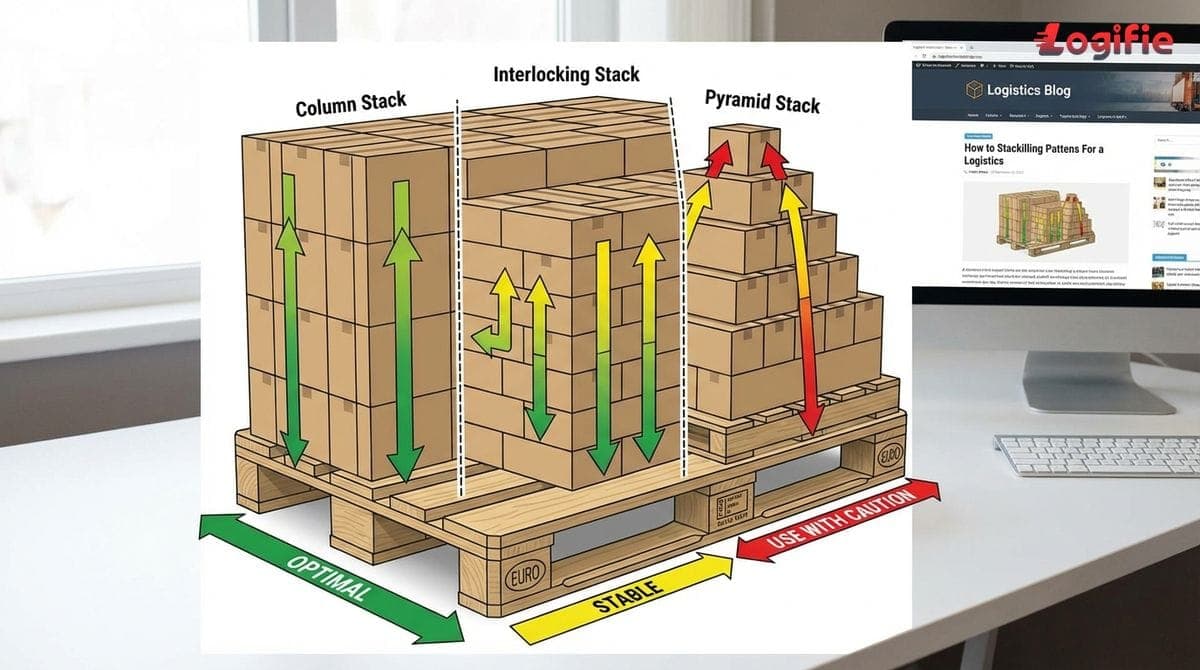
- Stack in columns or interlock. Column stacking (boxes directly on top of each other) maximises stacking strength but may be less stable. Interlocking (staggering boxes) increases stability by binding layers together. For mixed loads, use an interlocking pattern to reduce shifting (Jungheinrich AG, 2024).
- Keep centre of gravity low. Heavy items should be near the pallet base to prevent tipping.
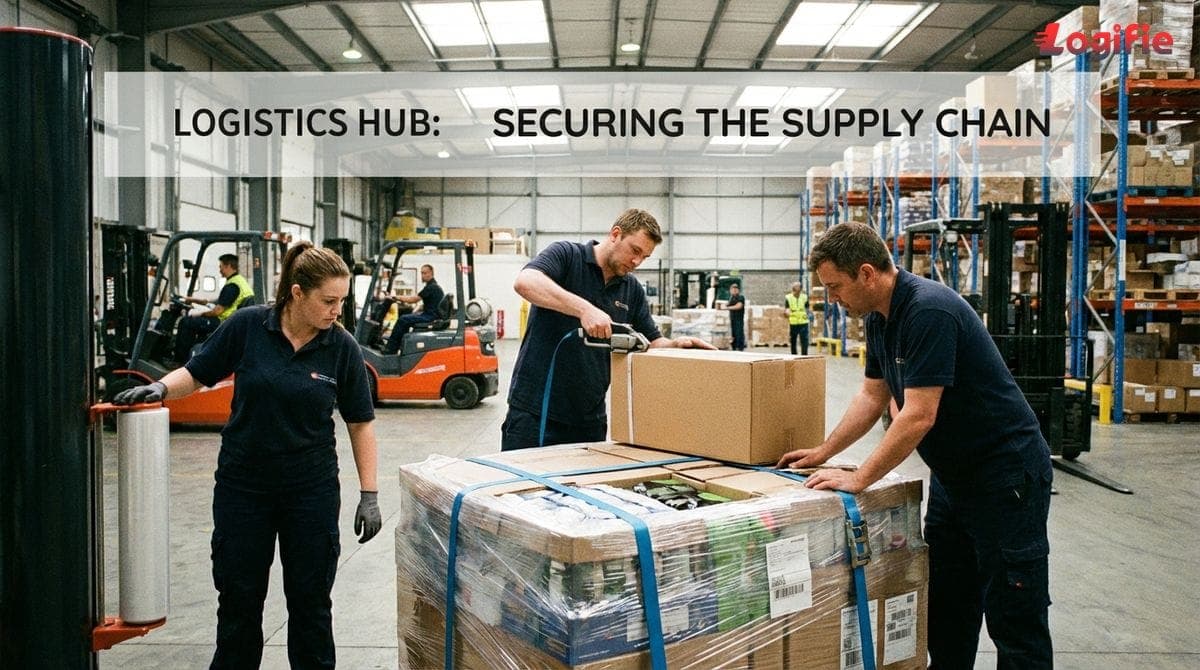
- Secure the load. Use stretch film, shrink wrap, strapping or lashing straps to bind the load to the pallet. For heavy or irregular loads, corner boards and edge protectors distribute tension.
- Label clearly. Display handling instructions (e.g., "fragile" or "this side up"), barcodes and shipping labels on multiple sides for quick identification.
- Avoid gaps. Fill void spaces inside boxes and between layers with dunnage to prevent movement.
- Consider pallet covers. For sensitive goods, use plastic or tarpaulin covers to protect against moisture and dust during transport.
Load Securing and Vehicle Considerations
Inadequate cargo securing contributes to up to 25 % of truck accidents (European Union, 2014). Following EU guidelines for cargo securing helps protect drivers and other road users. Key points include:
- Use appropriate securing devices. Ratchet straps, anti-slip mats, airbags and blocking braces help immobilise loads.
- Check equipment condition. Worn or damaged straps should be replaced.
- Balance the load. Distribute weight across the truck to prevent overloading axles and improve handling.
- Inspect regularly. Drivers should inspect the load and securing devices at each stop and after sharp manoeuvres.
Best Practices for Different Cargo Types
- Fragile goods: Use cushioning materials (foam, air pillows) inside boxes; double-stack only if boxes are rated for stacking.
- Liquids: Secure drums upright; use bulkheads or IBC containers to prevent sloshing.
- Perishable goods: Use insulated containers and refrigerate according to ATP requirements. Pre-cool both the cargo and the trailer to the required temperature (IAT Insurance Group, 2023).
- Hazardous materials: Follow ADR regulations; use approved packaging and label the pallet with hazard class numbers. Drivers must carry ADR certificates.
Conclusion: Package Well to Deliver Well
A properly packaged and palletized load travels safely, reduces claims and improves transport efficiency. By following Euro pallet standards, employing sound stacking techniques and securing cargo with appropriate equipment, shippers can minimize damage and ensure goods arrive intact. Partnering with a logistics provider like Logifie helps implement these best practices consistently across Europe.
Sources
European pallet: dimensions, types and logistic uses (Across Logistics, 2025) - Provides the standard dimensions (1,200 × 800 × 144 mm) of a Euro pallet, its load capacities (up to 1,500 kg dynamic, 4,000 kg static) and the history of the EPAL certification.
Palletizing and load securing tips (Jungheinrich AG, 2024) - Offers palletisation tips such as even weight distribution, avoiding overhang, using interlocking stacking and securing loads with stretch film or straps.
European best practice guidelines on cargo securing (European Union, 2014) - Notes that up to 25% of accidents involving trucks are attributable to inadequate cargo securing and provides guidance on using proper securing equipment.
The Most Common Trucking Cargo Claims and How to Avoid Them (IAT Insurance Group, 2023) - Advises that refrigerated cargo should be pre-cooled and that drivers should inspect and maintain cooling equipment regularly to prevent temperature-related claims.