How to Reduce Fuel Costs in Road Freight: 12 Proven Strategies for European Operators (2026)
Diesel up 25% across Europe? Here are 12 data-backed strategies to reduce fuel costs in road freight — from eco-driving to smart surcharges.

Logifie Team
Logistics Technology Experts
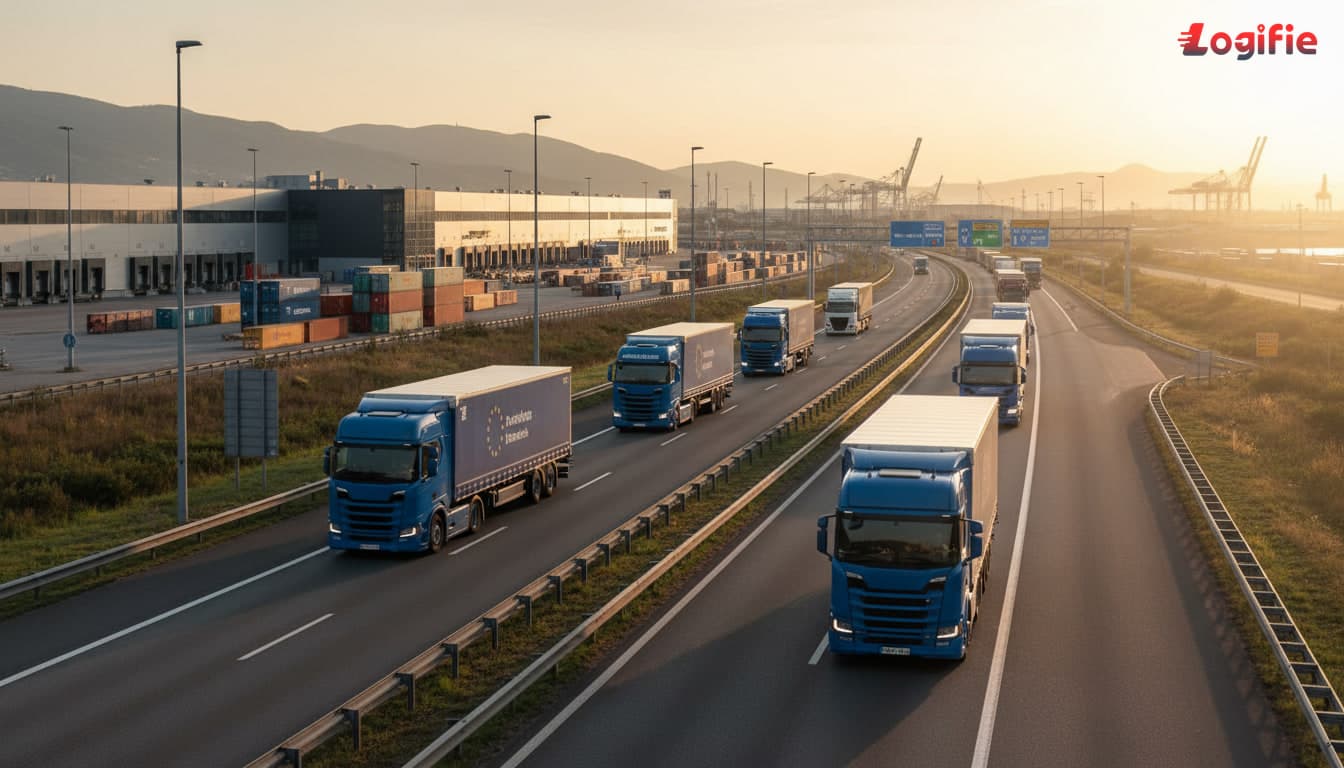
EU diesel prices surged ~25% since the Iran war escalation in Feb 2026, with German diesel hitting €2.17/L and operators paying ~€1,200 more per truck per month.
How to Reduce Fuel Costs in Road Freight: 12 Proven Strategies for European Operators (2026)
With diesel prices across the EU surging roughly 25% since February 2026 — hitting €2.17 per litre in Germany and €2.52 in the Netherlands — fuel has reclaimed its position as the most urgent cost pressure in European road freight. For a standard long-haul truck covering 10,000 km per month, that translates to approximately €1,200 in additional monthly fuel costs . You cannot control the price at the pump, but you can control how much diesel your fleet burns and how effectively you recover those costs. This guide lays out 12 data-backed strategies to reduce fuel costs in road freight — from driver behaviour changes that pay off within days to structural adjustments that protect your margins for years.
How Much of Your Operating Cost Is Fuel?
Before diving into solutions, it helps to understand the scale of the problem. Fuel typically accounts for 20% to 40% of total fleet operating costs , depending on the corridor, vehicle age, and current diesel prices. On the Poznan-to-Essen corridor, one of Europe's busiest east-west trade lanes, the fuel share of total trip costs jumped from 24.6% to 28.4% in early 2026 alone — an absolute increase of roughly €62 per trip .
That means a fleet running 20 trucks on similar corridors absorbs an extra €25,000 or more per month in fuel costs alone. Every percentage point you shave off consumption goes straight to the bottom line.
Strategy 1: Enforce Speed Limits and Eco-Speed Policies
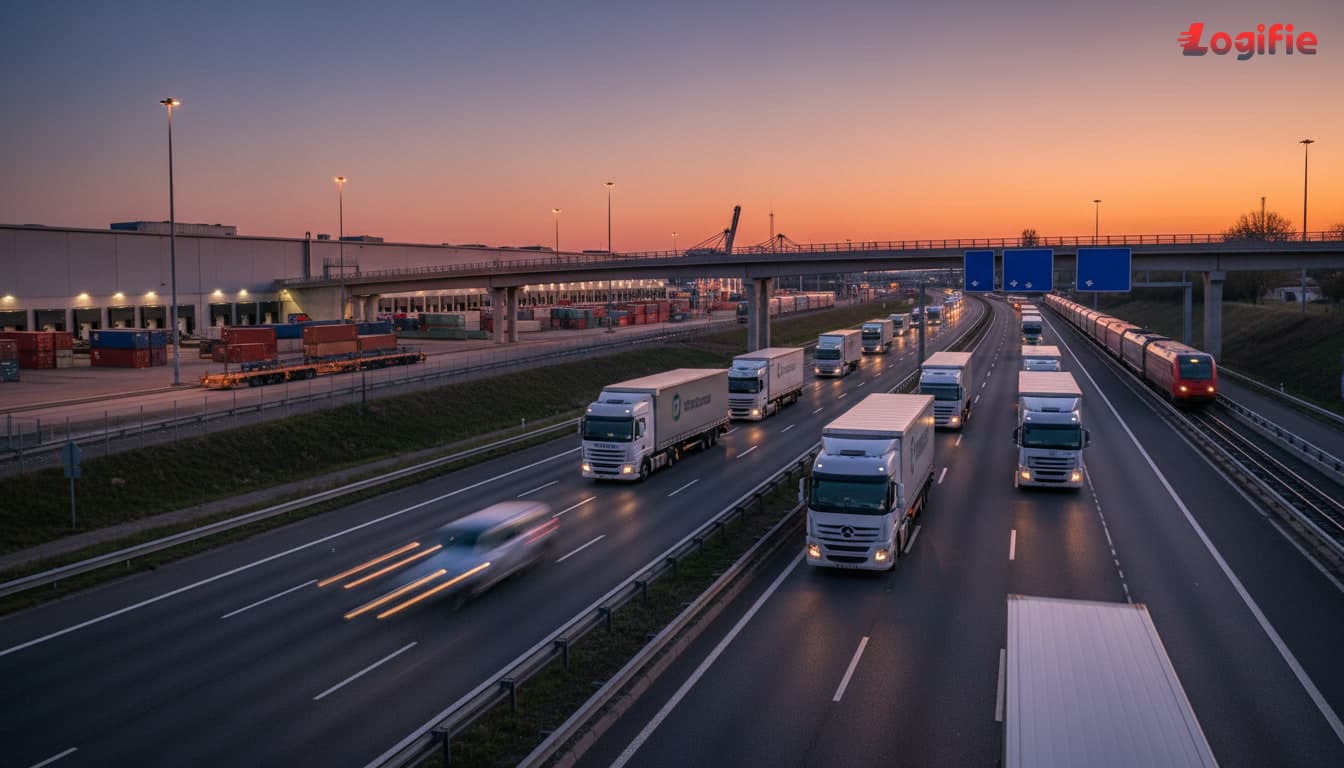
Speed is the single biggest variable you can control. According to FreightWaves , every 1 mph (1.6 km/h) increase above 105 km/h costs roughly 0.14 MPG in fuel economy. A truck driven at 120 km/h burns approximately 27% more fuel than one driven at 105 km/h — on the same route, carrying the same load.
Setting a governed top speed of 85–89 km/h for loaded highway driving is one of the simplest fuel-saving measures a fleet can implement. Many European operators already cap speeds at 85 km/h on motorways, well below the EU's mandatory 90 km/h limiter, and report measurable savings within the first billing cycle.
Strategy 2: Invest in Eco-Driving Training
The EU-funded ECOWILL project trained over 10,000 drivers across 15 European organisations and measured an average fuel savings of 7.5% immediately after training, with estimates of up to 15% reduction when techniques were fully adopted. Eco-driving focuses on smooth acceleration, anticipatory braking, optimal gear selection, and maintaining momentum — skills that cost nothing once learned.
The IRU Academy offers certified eco-driving courses specifically designed for commercial vehicle operators across Europe. Even without a formal programme, fleet managers can coach drivers using telematics data to identify the worst fuel performers and bring them up to the fleet average. A fleet where the worst drivers burn 15% more fuel than the best has a 15% opportunity gap waiting to be closed.
Strategy 3: Slash Idle Time
A stationary truck with the engine running burns approximately 3 litres of diesel per hour . For a driver who idles 2 hours per day — not unusual during loading waits, border crossings, or overnight heating — that is 6 litres wasted daily, or roughly 130 litres per month at current European diesel prices of around €2.00/L. That is €260 per truck per month burned while standing still.
Solutions include auxiliary power units (APUs) for cab heating and cooling, automatic engine shut-off after 5 minutes of idle, and better scheduling to reduce wait times at loading docks. Some telematics platforms flag idle events in real time, allowing dispatchers to intervene immediately.
Strategy 4: Optimise Routes for Fuel, Not Just Distance
The shortest route is not always the cheapest. Route optimisation software analyses elevation profiles, traffic patterns, toll costs, and fuel station locations to find the lowest total-cost path. According to Michelin Connected Fleet , route optimisation alone can reduce fuel costs by up to 15%.
In European road freight, this matters more than in flat-terrain markets. A route from Rotterdam to Milan via the Brenner Pass involves sustained Alpine climbs that dramatically increase fuel consumption compared to a western alternative through France and the Fréjus tunnel — even if the distance is similar. Factoring in Austrian and Italian toll costs alongside fuel consumption often reveals that the "obvious" route is not the optimal one.
Logifie's smart analytics platform helps shippers and forwarders compare corridor costs including fuel, tolls, and transit time — giving you data-driven route decisions rather than guesswork.
Strategy 5: Maintain Tyre Pressure Religiously
Under-inflated tyres are a silent fuel drain. Research shows that tyres under-inflated by just 10 psi increase fuel consumption by 0.5% to 1.0% , and approximately 20% of trucks on European roads operate with at least one tyre under-inflated by 20 psi or more.
For a fleet of 20 trucks, correcting tyre pressure fleet-wide could save 1–2% on the total fuel bill — a surprisingly large number when multiplied across hundreds of thousands of kilometres. Automatic tyre inflation systems (ATIS) fitted to trailers ensure pressure stays optimal without relying on manual checks. Combined with low rolling resistance tyres and aerodynamic improvements, the ICCT estimates total fuel savings of up to 20%, or roughly 11,800 litres per truck per year .
Strategy 6: Fit Aerodynamic Aids
At motorway speeds, over 50% of a truck's engine power goes to overcoming aerodynamic drag. Trailer side skirts, boat tails, cab roof fairings, and gap reducers between tractor and trailer can collectively reduce fuel consumption by 5–15%, depending on the combination and typical operating speed.
The payback on aerodynamic kits is typically 12–18 months at current diesel prices. For long-haul operators averaging 120,000 km per year, a 10% fuel saving at €2.00/L and 30 L/100km consumption means roughly €7,200 saved annually per truck — a compelling return on a €3,000–€5,000 kit investment.
Strategy 7: Use Telematics to Close the Performance Gap
Fleet telematics systems that track fuel consumption per driver, per route, and per vehicle enable data-driven management. According to data cited by Michelin Connected Fleet and the U.S. Department of Energy , vehicles monitored by telematics achieve up to 20% better fuel efficiency than unmonitored equivalents.
The key is not just collecting data but acting on it. Identify the top-quartile and bottom-quartile drivers by fuel efficiency, understand what the best performers do differently, and coach the rest. When drivers know their fuel consumption is visible, behaviour changes fast. Some fleets tie fuel performance to bonus structures — even a modest €50–€100 monthly bonus for top performers costs far less than the fuel waste of unchecked driving habits.
Strategy 8: Negotiate Fuel Surcharge Clauses Tied to Official Benchmarks
If you are a carrier, ensure every contract includes a fuel surcharge mechanism indexed to a transparent, official benchmark. The EU Weekly Oil Bulletin , published every Wednesday by the European Commission, provides weighted-average diesel prices across all 27 member states. In Germany, the BAG (Federal Office for Goods Transport) publishes its own diesel index that many operators use.
A well-structured surcharge clause activates automatically when diesel deviates more than 3–5% from an agreed baseline price, with monthly recalculation. This does not reduce your fuel costs — it ensures you actually recover them from customers rather than absorbing the hit. In early 2026, carriers without surcharge clauses have been absorbing a 5.3% increase in total operating costs on major corridors with no mechanism to pass it through.
If you are a shipper, accepting a fair surcharge clause protects your carrier relationships and ensures consistent capacity. Carriers forced to absorb fuel spikes either leave the market or deprioritise your loads.
Strategy 9: Exploit Cross-Border Fuel Price Differentials
Diesel prices in March 2026 ranged from €1.53/L in Slovenia to €2.52/L in the Netherlands — a spread of nearly €1.00 per litre. For a truck with a 600-litre tank, filling up in Slovenia rather than the Netherlands saves approximately €594 per fill.
Strategic fueling — planning routes so that trucks fill up in lower-cost countries — is standard practice among experienced European operators but often overlooked by smaller fleets. Check logifie.com/fuel for real-time diesel prices by country, including breakdowns for Germany , Poland , France , and Spain . Key low-cost fueling countries in 2026 include Slovenia, Croatia, Hungary, Poland, and Spain, while the Netherlands, Denmark, Germany, and France sit at the high end.
European fuel cards from providers like DKV, UTA, and Euroshell offer network-wide discounts of 2–5 cents per litre and eliminate cash handling. Some also provide route planners that factor in fuel price differentials.
Strategy 10: Right-Size Your Fleet and Maximise Load Factors
An empty or half-loaded truck burns nearly the same fuel as a full one. Improving load utilisation from 70% to 90% effectively reduces your fuel cost per tonne-kilometre by over 20% without changing anything about the vehicle itself.
This means consolidating shipments, using LTL groupage when FTL volumes do not justify a full truck, and reducing empty return legs through backhaul matching. Logifie's platform connects shippers and carriers across European corridors, helping operators find return loads and reduce the dead kilometres that burn fuel without generating revenue.
The broader fleet-sizing question also matters: if your average utilisation is consistently below 75%, you may have more trucks than you need. Fewer, better-utilised trucks always outperform a larger fleet running half-empty.
Strategy 11: Maintain Vehicles on a Preventive Schedule
A poorly maintained engine does not just risk breakdowns — it wastes fuel. Clogged air filters alone reduce fuel economy by approximately 4% . Worn injectors, misaligned wheels, degraded engine oil, and faulty exhaust systems all compound the problem.
Preventive maintenance schedules based on mileage and telematics-flagged diagnostics catch these issues before they become expensive. The cost of an air filter replacement is trivial; the cost of burning 4% more fuel across 120,000 km per year is not.
Strategy 12: Plan for ETS2 and Future Carbon Costs Now
The EU's Emissions Trading System extension to road transport (ETS2) is set to launch in 2027 or 2028 , with current forecasts suggesting an additional €0.13 per litre in carbon costs at €48 per tonne of CO₂. This will permanently raise the floor on diesel costs across Europe, independent of oil market fluctuations.
Operators who invest in fuel efficiency now — whether through fleet renewal to Euro VI-e or newer vehicles, aerodynamic retrofits, or eco-driving programmes — will face a smaller ETS2 cost burden when it arrives. Those who wait will face a double shock: ongoing fuel price volatility plus a structural regulatory cost increase.
Fuel Cost Reduction by Strategy: What the Data Shows
| Strategy | Potential fuel saving | Payback period | Investment level |
|---|---|---|---|
| Speed governance (85 km/h) | 10–27% | Immediate | Low (software setting) |
| Eco-driving training | 7.5–15% | 1–3 months | Low–Medium |
| Idle reduction (5-min policy) | 3–5% of total fuel | Immediate | Low |
| Route optimisation software | Up to 15% | 3–6 months | Medium |
| Tyre pressure management | 1–3% | 1–2 months | Low–Medium |
| Aerodynamic retrofits | 5–15% | 12–18 months | Medium |
| Telematics + driver coaching | Up to 20% | 3–6 months | Medium |
| Cross-border fueling strategy | €500–€600/fill | Immediate | None |
| Load factor improvement | 20%+ per tonne-km | Ongoing | Low |
| Preventive maintenance | 3–5% | Ongoing | Low |
Note: Savings are not purely additive — some strategies overlap. A realistic combined improvement for a fleet implementing multiple measures is 15–30% reduction in total fuel spend.
European Context: Why These Strategies Matter More Here
European road freight operators face a unique combination of fuel cost pressures that their counterparts in other markets do not. Diesel prices vary by nearly €1.00/L across neighbouring countries, creating both a challenge and an opportunity. The EU's Mobility Package imposes return-vehicle requirements that increase empty kilometres. Toll costs in Austria and Hungary now exceed fuel costs per kilometre on some corridors , meaning total operating costs are more sensitive to route choice than ever. And the approaching ETS2 will add a permanent carbon price layer that rewards efficiency.
Meanwhile, Eastern European countries like Slovenia and Croatia have imposed diesel price caps to protect transport operators, while Western nations like Germany and France have refused fuel-price shields — widening the cross-border price differential that savvy operators can exploit.
The operators who will thrive through 2026 and beyond are those treating fuel efficiency as a permanent operational discipline, not a one-time project.
Your Fuel Cost Reduction Action Checklist
- Audit your current fuel spend: calculate cost per kilometre by truck, driver, and corridor using the last 90 days of data.
- Set governed top speeds at 85 km/h for loaded motorway driving and track compliance via telematics.
- Implement a 5-minute maximum idle policy with automatic engine shut-off or real-time dispatcher alerts.
- Enrol your worst-performing 20% of drivers in eco-driving training within the next 30 days.
- Check tyre pressures fleet-wide this week — and schedule ATIS installation for trailers on the next service cycle.
- Evaluate aerodynamic kits (side skirts + boat tails) for your highest-mileage tractors and trailers.
- Review every active contract for a fuel surcharge clause indexed to the EU Weekly Oil Bulletin or your national diesel index.
- Map your most frequent corridors and identify where to fill up in lower-cost countries — use logifie.com/fuel for live prices.
- Measure load utilisation rates monthly and target 85%+ average across the fleet.
- Schedule preventive maintenance checks at manufacturer-recommended intervals — never skip air filters, tyre alignment, or injector inspections.
- Run a total-cost route comparison (fuel + tolls + time) for your top 5 corridors, factoring in elevation and border wait times.
- Model your ETS2 exposure: estimate the additional cost per kilometre at €0.13/L and identify which efficiency investments offset it.
FAQ
How can I reduce fuel consumption in my truck fleet?
The most effective approach combines driver behaviour changes with vehicle optimisation. Start with speed governance at 85 km/h on motorways (saves up to 27% vs. 120 km/h), eco-driving training (7.5–15% savings per the EU ECOWILL project), and idle reduction policies. Add tyre pressure management, aerodynamic aids, and telematics-based coaching for compounding improvements. Realistic combined savings for a fleet implementing multiple strategies range from 15% to 30%.
What percentage of trucking costs is fuel?
Fuel typically accounts for 20% to 40% of a fleet's total operating costs in Europe, depending on the corridor, vehicle age, and current diesel prices. On the Poznan-to-Essen corridor in early 2026, fuel's share jumped from 24.6% to 28.4% after the diesel price surge. With tolls, driver wages, insurance, and maintenance making up the remainder, fuel is usually the second-largest cost line after labour — and the most volatile.
How do fuel surcharges work in European freight?
A fuel surcharge is a variable fee added to the base freight rate that adjusts with diesel prices. In Europe, surcharges are typically indexed to the EU Weekly Oil Bulletin (published every Wednesday by the European Commission) or national benchmarks like Germany's BAG diesel index. They are recalculated monthly and typically activate when diesel deviates more than 3–5% from an agreed baseline. Without a surcharge mechanism, carriers absorb the full impact of price spikes — which in early 2026 has meant a 5.3% increase in total trip costs on major corridors.
Need reliable European freight with real-time tracking and smart analytics? Get a Free Quote | Join Our Carrier Network
Sources
Fuel prices continue to climb — IRU