Unmarked truck patrols spread across Europe in May 2026
Suffolk Constabulary's March 2026 unmarked HGV operation detected 130 offences; Operation Tramline now runs in 36 UK forces plus Germany and the Netherlands.

Logifie Team
Logistics Technology Experts
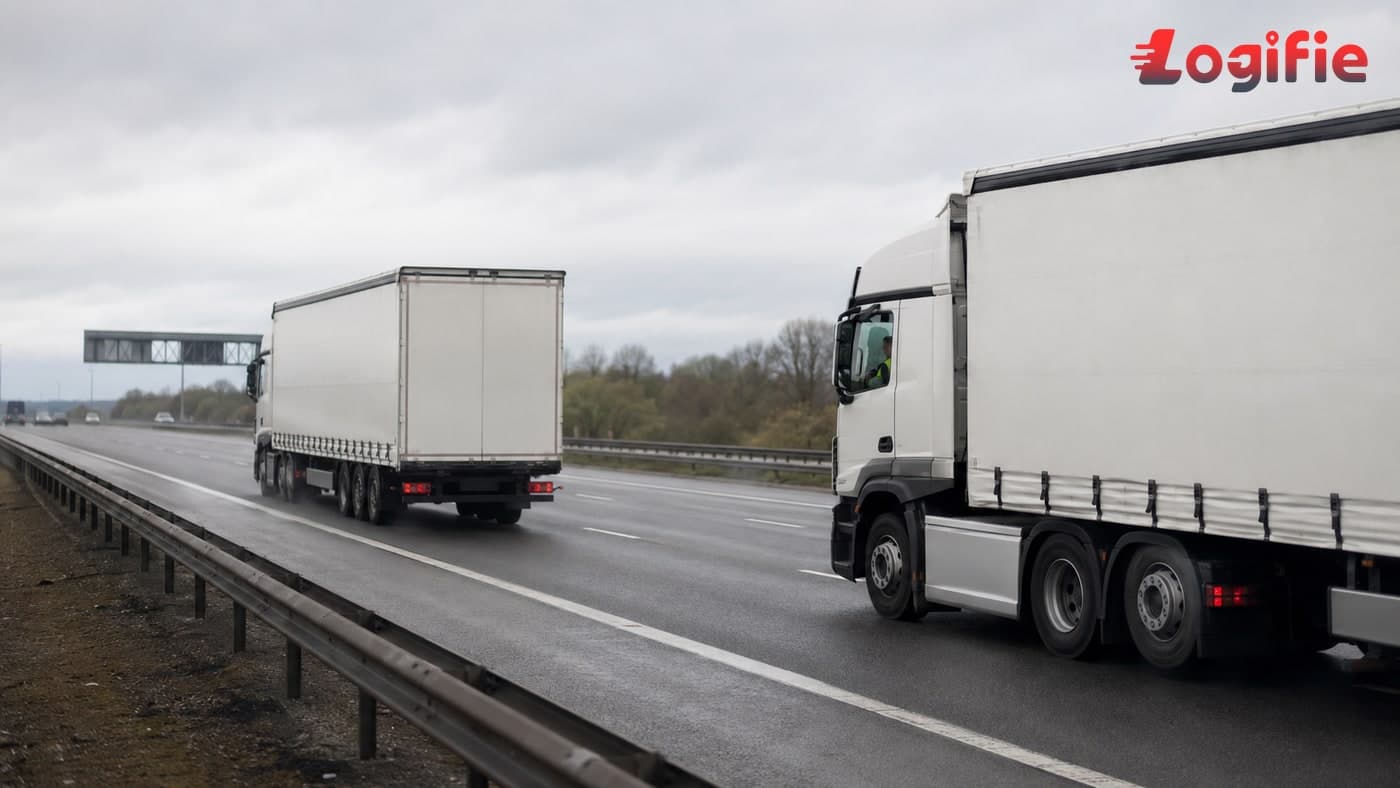
Unmarked police HGVs are now catching more in-cab offences than patrol cars across several European countries. Suffolk Constabulary detected 130 offences from 130 vehicle stops during a four-day operation on the A14, A12 and A11 in March 2026, with results published in mid-May. The same tactic — officers observing lorry cabs from inside an unmarked cab of their own — is now permanent in 36 UK partner forces and has been adopted in Germany and the Netherlands. For operators, motorway enforcement no longer comes only from a visible patrol car on the verge.
What the Suffolk operation looked like
The Suffolk Constabulary checks ran between 10 and 13 March 2026 on the A14, A12 and A11 in eastern England, using an unmarked HGV tractor unit loaned by National Highways . From the elevated cab, officers could look directly into 130 passing vehicles — 57 HGVs, 36 light goods vehicles, 34 cars, one bus, one motorcycle and one agricultural vehicle.
Officers issued 128 Traffic Offence Reports, made 12 referrals to the Traffic Commissioner and collected one roadside deposit from a foreign driver. The most common breach was the simplest: 50 seatbelt offences. Mobile phone use followed with 27 offences. There were 17 roadworthiness defects, 15 cases of drivers not being in proper control, and 12 of careless driving. Speeding accounted for four offences and insecure load for three. One HGV cab held so much loose rubbish that items were judged capable of sliding under the pedals, recorded as a control-risk offence.
How the tactic spread across the UK, the Netherlands and Germany
Operation Tramline, the umbrella programme behind the Suffolk checks, has been running since 2015. National Highways supplies unmarked HGV cabs to 36 police partners across England and Wales. Cumulative figures published by the programme show more than 54,000 vehicles stopped and more than 59,000 offences recorded; HGVs account for 40 percent of those stops, vans 22 percent and cars 34 percent.
The same logic — sit at lorry height, see what a patrol car cannot — has been adopted on the continent, according to trans.info reporting . In the Netherlands, police have used vans, coaches and a camper van as observation platforms on the A7, A6, A28 and A32 motorways; one reported operation ended with 355 drivers fined in a single day, including 104 lorry drivers. In Lower Saxony, a year-long pilot by the Oldenburg police caught almost 1,700 truck drivers using phones while driving — enough to make unmarked-van checks permanent. Bavarian officers use a camper van that overtakes offending vehicles and flashes the German command for stop on a rear LED panel.
What operators should change before summer 2026
Coordinated enforcement is also intensifying. ROADPOL , the European Roads Policing Network, ran its second Truck and Bus week of the year from 4 to 10 May 2026 and has a further coordinated operation scheduled for 16 to 22 November 2026. National forces frequently extend targeted checks outside those weeks, and the unmarked-cab tactic now sits alongside roadside roadworthiness checks and toll-data crosschecks as a routine enforcement layer.
For fleet managers and dispatchers, the immediate operational response is to brief drivers that any lorry cab on the motorway — including the one beside them — may be carrying a camera and an officer at lorry height, and to update phone and seatbelt policy accordingly. Cab tidiness, load security and roadworthiness should be treated as pre-trip checks rather than delivery-end checks; the Suffolk operation logged 17 roadworthiness and three insecure-load offences in a single four-day window.
Compliance documentation also needs review ahead of the 1 July 2026 deadline set out in Regulation (EU) 2020/1054 . The regulation brings light commercial vehicles between 2.5 and 3.5 tonnes engaged in international transport under the same driving-hours and smart tachograph regime that already governs HGVs.
For European fleet operators planning summer routes, Logifie supports compliance-aware route planning and freight pricing. Request a compliance-aware freight quote , or review our country-by-country guide to truck driving bans for the corridors most affected by intensified May to September enforcement.