Netherlands cuts truck toll 22% from September 2026
The Netherlands will cut its new kilometre-based truck toll by 22.3% from 1 September 2026, saving carriers EUR 80 million amid a diesel price surge.

Logifie Team
Logistics Technology Experts
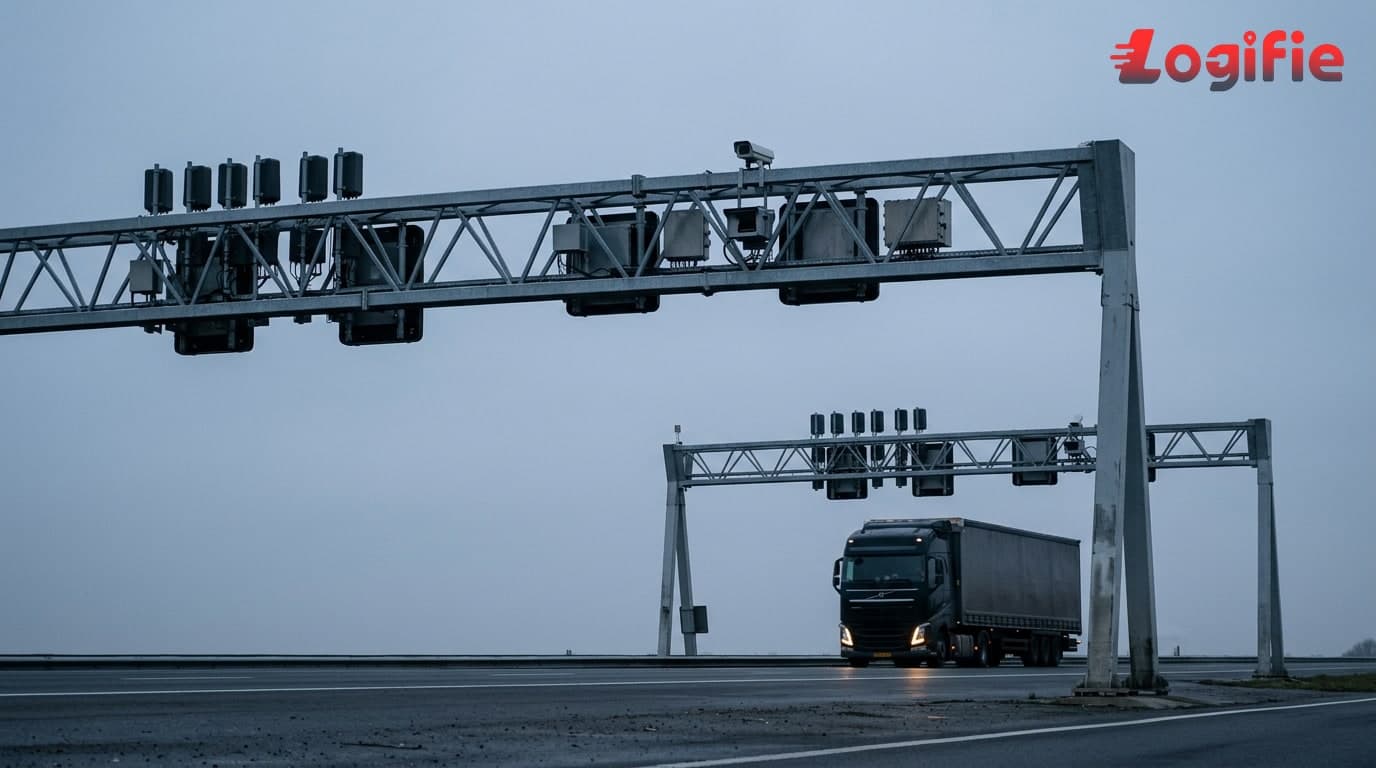
The Dutch government announced on 2026-05-22 that the new kilometre-based truck toll launching on 1 July 2026 will be discounted by 22.3 percent from 1 September 2026 through 31 December 2026. The measure responds to sharply higher diesel costs triggered by the Middle East conflict and is expected to save carriers a combined EUR 80 million in the final four months of the year.
What operators pay before and after 1 September
From 1 July, a standard Euro 6 truck above 32 tonnes will be charged EUR 0.201 per kilometre on Dutch motorways and selected provincial roads. From 1 September, that rate falls to EUR 0.156 per kilometre — a saving of EUR 0.045 per km driven. Operators running Euro 0 trucks above 32 tonnes face EUR 0.487 per km from July and EUR 0.379 per km from September. The same 22.3 percent reduction applies to every vehicle category in the scheme, including zero-emission trucks: a CO2 class 5 vehicle above 32 tonnes moves from EUR 0.038 to EUR 0.030 per km.
Infrastructure and Water Management Minister Vincent Karremans told parliament the temporary reduction is designed to ease pressure on transport companies. "Filling up a tank has become significantly more expensive since the start of the conflict in the Middle East. Truck operators feel this acutely, as they drive many kilometres to keep our economy moving."
According to the official toll operator RDW , the reduced rates apply uniformly across all vehicle types covered by the scheme, meaning the discount offers proportionally equal relief to both conventional and zero-emission fleets.
Who benefits most, and why the gap matters
The rate structure is deliberately steep across Euro standards. From September, a Euro 0 truck above 32 tonnes will pay more than 12 times what a zero-emission vehicle in the same weight class pays. That gap reflects the system's design intent: the Netherlands frames the toll as both a user charge and a fleet-renewal lever, not simply a revenue mechanism.
The temporary discount does not narrow the gap between the cleanest and dirtiest vehicles. It reduces all rates by the same proportion, preserving the relative incentive to upgrade. For operators already running Euro 6 fleets, the September cut improves route economics on the Dutch corridor; for those still running older vehicles, the base rate remains the highest on any EU motorway network.
The backdrop makes the relief meaningful. EU average diesel prices climbed from EUR 1.56 per litre at the end of Q4 2025 to EUR 1.96 per litre at the end of Q1 2026 — a 26 percent rise — according to IRU's Q1 2026 European Road Freight Rates report . For high-mileage international carriers, the combined effect of higher fuel costs and new per-kilometre tolls was putting significant pressure on Dutch-corridor margins. ING THINK's January 2026 European road haulage outlook identified rising toll charges as one of four structural cost pressures weighing on fleet economics alongside fuel, wages and decarbonisation investments.
What operators need to do before July
The 22.3 percent cut changes the cost outlook from September onward, but it does not change what carriers must do before 1 July. All trucks above 3.5 tonnes operating in the Netherlands need a contract with an approved toll provider and a functioning on-board unit installed before the system goes live. Enforcement from day one will use cameras, mobile inspection units and roadside checks; during the introductory period from 1 July through 31 December 2026, fines are set at EUR 400 per violation, rising to EUR 800 from 1 January 2027 — per the Dutch enforcement schedule .
Carriers registered and compliant before July will receive the lower September rate automatically — no separate application is required. For operators still arranging OBU contracts, the full compliance checklist and provider list is on Logifie.
If your routes run through the Netherlands, Logifie also tracks live fuel prices for the Netherlands so you can model the actual cost impact of the new toll against current pump prices.